THE FINAL STATEMENT OF RUFAT SAFAROV
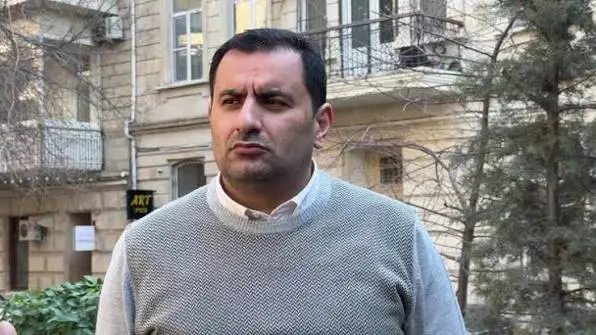
Esteemed Court! Esteemed State Prosecutor! Esteemed and dear lawyers! Esteemed and dear friends and colleagues!
It is no secret to anyone that the present proceedings stem not from law, statute, or legal norm, but purely from a system of socio-political relations. It is a fact that at every stage of the investigation, the tasks, fundamental principles, and conditions of criminal judicial proceedings were cast aside. Objectivity, impartiality, and fairness were not observed. In particular, the principles of legality and of the equality of all before the law and the courts were ground into the dust.
Yes, I confirm that on the day of my detention — 3 December 2024 — a criminal act did indeed take place. I was unlawfully detained and arrested. Knowingly false statements and false opinions were given, and unjust decisions were issued. In this sense, it is the operatives, the fabricated victims and witnesses, the investigator, the prosecutor, the judges, and the expert who ought to be held criminally liable and made to answer before the law. The roles have simply been reversed. Even though none of my actions contain the elements or circumstances of a crime, for one year and six months I have been cut off from society, from my family, from my loved ones, and from my work — branded a “fraudster,” a “hooligan,” a person who “intentionally inflicted minor bodily harm.”
This is the triumph of injustice, the triumph of legal nihilism. It is an act of political violence carried out in the name of the law.
This is the fearsome Baku, the dreadful Azerbaijan, where the fundamental rights of man have been plunged into dark obscurity.
Esteemed Court! Without doubt, during both the preliminary and judicial investigations, my esteemed lawyers Elchin Sadigov and Rovshana Rahimli demonstrated, in full accordance with the requirements of the law in force, that the charges brought against me are fabricated, baseless, and hollow; and with great professional skill they further dismantled an indictment that was already standing on its head. I applaud, standing, the closing defense speeches of my lawyers.
I declare: because this fabricated case — commissioned by the Presidential Administration and carried out by the Ministry of Internal Affairs — is bound up with a violent, Machiavellian policy, I am compelled to frame my speech, my address to this Court, and my appeal to the public within the context of the political realities of our time, and to touch broadly upon Azerbaijan’s domestic politics. I note immediately that, as an ordinary citizen sharing the same ranks as nearly 400 political and conscience prisoners held behind the prison walls of our homeland, I am, in a certain sense, not a complainant. Were I anywhere other than where I am supposed to be right now, I would be troubled.
Esteemed Court, I will turn to the details in later parts of my speech, but for now I am eager to answer this question: Why am I here today? What reasons have turned me into a target of the authorities?
Of course, those who know already know — but for those who do not, in order to give a meaningful answer to these questions I will need to go back, sometimes 11 years, sometimes 28 years, sometimes 23 years, so that those who follow my activities may clearly understand the age, the history, and the stages of formation of the worldview I hold, the ideological values I have embraced, and the scope of my socio-legal outlook.
I, Rufat Safarov, am the son of Colonel Eldar Sabiroglu — one of the founders of the ruling party, a man who played a direct role in shaping the party’s policy in its early years, a politician who served for five years as a deputy in the National Assembly, and who for seven years was responsible for media and public relations at the Ministry of Defense. Every room of the house in which I grew up was adorned with portraits of the late head of state Heydar Aliyev and the current head of state Ilham Aliyev — naturally, in accordance with the personal and political will of the head of the family. Yet I did not fall under the influence of this family political upbringing — not from the very first years of my youth.
I admit that although I lacked the courage to openly resist or express independent views, I tried, in secret from my family, to take some initial steps of my own. Imagine this: in October 1998, while my father was serving as press secretary and public representative of Heydar Aliyev’s election campaign headquarters, I attended a rally organized by opposition candidate Etibar Mammadov at Fuzuli Square, and applauded the speeches of those whom, at the time, I regarded as the just speakers. When I returned home, I lied, saying that my friends and I had simply been walking along Nizami Street. I was only 17 years old.
In October 2003, at the rallies held in Galaba (Victory) Square, I listened in person to presidential candidates Isa Gambar and Etibar Mammadov, and applauded the speakers’ democratic calls with great enthusiasm. On 15 October I voted for Isa Gambar. On 16 October I sat at home and wept bitterly. I was 22 years old. But I was deeply anxious — and, what is more, I feared that if my family found out, I would face serious trouble.
In the 2005 parliamentary elections, I voted for the “Azadliq” (Freedom) bloc. I also asked three or four childhood friends to vote for parliamentary candidate Arzu Samadbayli. However, I was afraid to take direct part in the mass events that were organized. At that time I was chief legal counsel at the Ministry of Agriculture, and at the same time a member of the Supervisory Board of“Agroleasing” Open Joint-Stock Company. I could not cross the threshold of risk.
But what could I do? I put on an orange tie and went to work. At that time I was studying in the correspondence department of the Faculty for Training Senior Personnel at the Academy of Public Administration under the President. Wearing that orange tie, I also attended some of my classes. They did not recognize me as an oppositionist — I was, so to speak, waging my own quiet partisan resistance. It seems they took the tie for nothing more than a random fashion choice. I was 24 years old at the time.
Finally, the last time I approached a ballot box was in 2013. I was working as an investigator at the Zardab District Prosecutor’s Office. Early one morning I went to the polling station, voted for Professor Jamil Hasanli, and returned to my office.
One might ask: what is the point of recounting these voting experiences of mine? The crux of what I am saying is this: ever since I came to understand myself, ever since I began to grasp the political environment around me, I have consciously said “yes” to democratic calls, to the idea of civil society, and to the idea of a state governed by law. And I have said “no” to a system of governance that obstructs a pluralistic society, independent institutions, and media structures; that refuses to recognize free elections; that reduces the judicial-legal system to a mere appendage of the executive branch; and that turns law-enforcement bodies into instruments of repression.
To be honest, during the periods when I worked within state institutions, I tried more than once to express myself publicly. I wrote, then deleted; wrote again, then deleted again; never posted it. For a long time I prepared myself psychologically. In my mind, I lived through pressure, arrests, torture, and I asked myself a single, one-word question: “Will you endure it?” Once the answer was yes, I took the decisive step and shared my protest, my open views, and the ideas I carried within me with society. This took place on 20 December 2015.
Without forewarning my loved ones, my family, my parents, my friends, my colleagues — not a single living soul — I issued a public statement and resigned, as an act of protest: against the lawlessness running rampant in the country; against feudal-style arbitrary rule; against injustice; against the burial of the principle of equality deep in the black earth; against corruption reaching its very apogee; against the proliferation, within the work of law-enforcement bodies, of torture, inhumane treatment, and conduct that degrades human dignity — in short, against authoritarian governance as such.
Immediately after this, the persecution, the violence, the arrests, the torture that I had only imagined became the reality of my daily life. Two weeks after my resignation, Kamran Aliyev — then head of the Main Department for Combating Corruption — called a press conference and presented me to Azerbaijan as a “corrupt official.” I was arrested and charged once again with accepting bribes. A week later, however, the head of state, Ilham Aliyev, intervened, and — against all expectations — I was released to house arrest.
At that time, ten years ago, I asked myself a single question: “What is to be done?” The answer was this: I must distinguish myself through a collection of articles entitled “The Murder of Law,”addressing the governance mechanisms of the Azerbaijani authorities and the philosophy of official Baku’s domestic legal policy, and, with the help of the newspaper Azadliq, share with society the socio-political and legal thinking I had accumulated over the years.
I remember it well: the fear that had ruled my mind and my heart for so many years was, within the space of a single day, beneath my very feet. At that time, the investigator handling the fabricated criminal case said to me: “Rufat, I’ve tossed this six- or seven-page case file into the corner of the safe. Please, just sit quietly, let me close it, and let’s both be done with this.”
During the nine months of house arrest, as a civic activist and independent legal expert, I criticized the legal policy of the authorities, which had taken on an exceptionally harsh character. In fairness, I must say that the government tolerated this and did not return me to the investigative detention facility. This situation continued until former Health Minister Ali Insanov, while already in prison, was subjected for a second time to baseless charges. I gave an extensive interview to Radio Azadliq, defended Insanov’s violated rights, and criticized the decision of the head of state, Ilham Aliyev. Because I had taken up the defense of Insanov — who at that time was in a state of extreme hostility with the government — a harsh decision was issued against me once again. Just two days after that interview, the Lankaran Court for Serious Crimes sentenced me to nine years’ imprisonment.
I was held for three years in Penitentiary Institution No. 9. I did not consider prison life an obstacle; on the contrary, I regarded it as a continuation of the path I had chosen. During my imprisonment I continued to speak out, through articles and interviews, about the dire state of human rights. The authorities’ response was extremely harsh. I was thrown into a punishment cell four times in succession and subjected to brutal mistreatment. Special-purpose forces entered Penitentiary Institution No. 9, where I was being held, and tortured me for hours. I remember well: had the Azerbaijani representatives of the Red Cross not come to see me urgently, God knows what my fate would have been after that.
Esteemed Court, even while enduring the most severe torture in that punishment cell, I found a moment to ask myself a question: “Do you have any regrets?” The voice that rose from within me answered: “None whatsoever!” That voice is still alive today, still standing. With God’s help, I am determined to keep it standing.
Of course, even during my years in prison I thought that, should I be released, founding a human rights organization together with friends and undertaking principled work in this field would be the demand of the times — however great the risks it might bring. And so we founded the human rights organization “Müdafiə Xətti” (“Defense Line”), and made our mark through weekly bulletins and quarterly reports on the legal landscape and the political climate. We began cooperating with international and regional organizations specializing in human rights, and with the diplomatic corps serving in Baku. We maintained open and transparent dialogue with the heads of law-enforcement bodies, with the National Assembly’s Human Rights Committee, with the Penitentiary Service, and with the Ombudsman’s Office, and were able to convey our criticisms and proposals to them directly. We hoped that we might contribute, even if only slightly, to easing the increasingly harsh climate of repression.
During this period we turned down numerous financially attractive offers, and kept ourselves away from any system of political relations that society would not be aware of. As an organization, we made every one of our contacts and dialogues with officials public without delay.
In the next, even more merciless wave of repression that began in the autumn of 2022, I received several warnings that, if I did not halt my activities, I would soon be knocking once again on the doors of a prison. I genuinely thought it over at length, weighed it carefully, and ultimately concluded that, whatever the cost, I had to continue this work. I had to remain faithful to the provisions and principles of the Manifesto that “Müdafiə Xətti” had announced to society at its founding; I had to remain true to my public commitments. In a situation where people, citizens, colleagues, and friends are being tortured, to fall silent and step aside is a grave wrong — as one of humanity’s great figures, Martin Luther King, put it: that to passively accept the injustice of a system is, in effect, to cooperate with that system and thereby to become complicit in its wrongdoing; and that when we think of wrongdoing, what comes to mind first is cruelty and terrible crimes — but inaction, in the face of a situation that calls for active help to others, can itself be a form of wrongdoing.
In this sense, up until the day of my arrest there was only one occasion on which I set my criticism aside: the 44 days of the Patriotic War.
Esteemed Court! I bring to your attention that, immediately after formalizing my human rights work, I was summoned to the Prosecutor General’s Office and given a warning laden with threats. What is more, on the official Facebook page of the Youth Union of the ruling New Azerbaijan Party, young party members reminded me of the fate of my esteemed colleague Oqtay Gulaliyev. I was forcibly detained by police officers on several occasions and subjected to harsh warnings; I served one month of administrative detention. But I regarded all of this persecution, this pressure, this deprivation and obstruction — spiritually and intellectually — as a continuation of the path I had chosen.
I want to convince the Azerbaijani public of this: had the United States Ambassador to Azerbaijan not, in August 2024, recognized the human rights work of “Müdafiə Xətti” and nominated it for an international award; had every US ambassador around the world not given a favorable opinion of that nomination, and had the Secretary of State not approved it; had I not been invited to the award ceremony due to take place in Washington on 10 December; and had my anticipated contacts during that trip — with US senators and congressmen, and with senior officials of the White House and the State Department — not been expected, then the Azerbaijani government, and more precisely the head of state, Ilham Aliyev, would not have pressed ahead with my arrest. Because in the month before my arrest I had freely left the country twice, and twice returned.
Incidentally, I have never harbored, and do not now harbor, any personal grudge against the current authorities, the state leadership, the ministers, the heads of committees, and so on. In fact, I once stood on subjective and fertile ground that could easily have led me to become part of the present system and to embrace the tenets of the ruling policy. Blunt as it may sound, I had “legitimate”grounds on which I could have chosen flattery and servility. For when my father, Eldar Sabiroglu, suffered a severe heart attack in 1999 at the age of 42, the late head of state Heydar Aliyev personally oversaw his treatment and ordered that professional cardiologists be brought from Moscow to Baku, and later had my father sent to London to recover.
What is more, just six years ago I had decided to sell my two-room apartment to pay for an operation for my father, who was suffering from advanced Parkinson’s disease — roughly 50,000 US dollars were needed. One day, presidential aide Anar Alakbarov telephoned my father and said:“Mr. Eldar, we are aware of the severity of your condition. On the instructions of the leadership, we are taking the costs of your operation and treatment upon ourselves.” I remember my father replying: “Thank you, Mr. Anar. I have troubled no one with this — not even Rufat gave me reason to approach the President.” The answer came back: “This call has nothing to do with Rufat. It is your own service that has been taken into account.” And so, on the instructions of the country’s leadership, my father — who was in an extremely grave condition — underwent brain surgery in Istanbul. Yes, it is a fact that, had that operation not taken place, my beloved father would in all likelihood not be alive today.
Of course, six years ago, immediately after the operation, I gave an extensive interview in which I recounted everything down to these very details; and although we had asked for nothing, I spoke highly of the leadership’s gesture and offered thanks on behalf of myself and my family. Nevertheless, I continued to criticize the ruling policy, the repressive apparatus, and the unlawful methods of governance.
By recounting all of this at such length, what I want to say is this: in building my work as a human rights defender, I have considered it my duty to set personal motives entirely aside and to give precedence to the public interest. It is the feelings I carry within me that have dictated this.
In what sense? Naturally, a human being is a bundle of feelings: joy, delight, comfort, peace, the sense of happiness — this is the world every person longs for. A person will naturally try to avoid a life filled with suffering, anguish, grief, deprivation, disappointment, and hardship — and rightly so. But there is a subtle, yet difficult point here. As I underlined at the start of my speech, lawlessness, regrettably, reigns supreme in Azerbaijan today, and the overwhelming majority of people are caught in a vice of socio-economic hardship. Azerbaijanis are not happy. Frankly, I came to realize that I have entirely closed off for myself the possibility of being happy in such an environment — of belonging to that narrow circle of the fortunate. Like the majority, I am ready, in my present circumstances, to live a life of suffering. In this sense, how could “Müdafiə Xətti” — a human rights organization that understands the principles of its mission and the substance of its work — possibly stand for everyone while keeping itself at a safe distance from the deprivation that everyone else endures?
In accordance with the publicly announced program and manifesto of “Müdafiə Xətti,” we have carried out our defense work without regard to citizenship, social or religious affiliation, language, origin, property status, official position, or belief — and we have kept in view even the violated rights of people serving within the state apparatus itself.
Esteemed Court! I ask nothing of you; I have no request to make. For I know full well that, especially in cases bearing political weight, Azerbaijani judges rent out their legal will to the repressive bodies of the executive branch. Today, on the order of some official of the Presidential Administration, or of some general within the law-enforcement bodies, you may bring baseless charges, conduct a sham judicial inquiry, and shortly thereafter hand down a sentence of 8 or 9 years’ deprivation of liberty. But such is the nature of your legal function that, one day, you might just as readily — without so much as a sigh — send behind four walls the very official who issued the dishonest orders against me and my colleagues. Azerbaijan’s judicial-legal practice is rich with such examples.
These thoughts of mine are dictated by the harsh and severe political climate of our country, a climate utterly incompatible with the rule of law — and this grim atmosphere recalls the working style of the “troikas” of 1930s Stalinism. But it seems our situation, as Azerbaijanis, is even more hopeless than that. In one of the previous hearings I touched briefly on what I am about to say now. Consider this: even within the legal system of Stalin — the most merciless dictator of any era — there were investigators and military prosecutors who managed to evade carrying out unlawful instructions and political orders that destroyed human lives, even at the cost of their own lives. Those investigators, those military prosecutors, listened to the voice of their conscience and their inner convictions even amid the tolling of the “execution bell.”
Although the death penalty does not exist among the punishments under Azerbaijan’s criminal law, I regret that I cannot, here, name a single investigator, prosecutor, or judge who has evaded an unlawful order or listened to the voice of his conscience. Speaking of listening — when Alexander of Macedon was hearing an accusation against a man, he covered one ear with his hand, and when asked why, replied: “I am keeping this ear for the accused.”
For 11 years now I have been taken back and forth between Azerbaijan’s police stations, temporary detention facilities, investigative detention centers, and penal institutions; brought before countless investigators, prosecutors, and judges; I have tried to defend my violated rights, and when necessary have demanded justice at the top of my voice — but I am not heard, no one listens. They act without conscience, without fear of God. Instead, my voice is heard by the just judges of the European Court of Human Rights abroad, who issue fair rulings. Under these harsh, almost unbearable conditions, we struggle, we speak, we think, and we say: thank God that despotic regimes have not yet managed to invent chains that can vaporize the human mind.
But there is bad news on this front too. These days I have been listening to a speech by the world-renowned Azerbaijani scientist Rafig Aliyev. Mr. Rafig says that, at the current pace of technological development, within 5 to 10 years machines will emerge capable of reading and learning the human heart. If that comes to pass, the “Thought Police” familiar to us from George Orwell’s 1984 will, in practice, become a structural department of Azerbaijan’s Ministry of Internal Affairs. They will try to build prisons for ten million people, because hearts filled with fear and hatred will be easy to read. Yes — the present authorities, the present system, would, to prolong their own existence, gladly send an entire nation behind four walls. Will they succeed? The Azerbaijani people will decide!
From the very outset, as a human rights activist, I remind the Azerbaijani authorities of the warning of the great thinker Diderot: that the people must be granted the right to criticize and to complain, for hidden hatred is more dangerous than open hatred.
As one of the co-founders of the human rights organization “Müdafiə Xətti,” and as a citizen who has consistently and rightfully criticized the methods of the present authorities, I want to hope that the hearth of the struggle for popular sovereignty, for the rule of law, and for the supremacy of law in Azerbaijan will not be extinguished — that it will go on smoldering. There will be found at least one Azerbaijani who will not let those embers die out. Sitting in my cell, thinking of that one Azerbaijani, I was reminded of the lone Chinese student who, bare-handed, stood alone on 5 June 1989 against the seventeen tanks sent into Tiananmen Square to crush the rallies demanding democratic change in Beijing.
Taking this opportunity, I call on my former colleagues — those still serving within the prosecutorial bodies — not to sink to the depths of injustice, and I wish to cite a passage from Philip Zimbardo, the well-known author of The Lucifer Effect. Zimbardo, the author of the Stanford Prison Experiment, observes that a system can declare the protest of a single person to be delusion or madness; it can call two people victims of mania — but once there are three, you will be taken seriously. After this citation, I should note that eleven years ago, when I made my own decision and left the prosecutorial bodies, word reached me of conversations going on within the offices of the Prosecutor General: “There’s no need to pay attention to Safarov. He’s crazy — he has psychological problems.”
Incidentally, in the Soviet era too, countless dissidents were confined to psychiatric and neurological dispensaries, to madhouses, for criticizing the ruling institutions and the official ideology. But why go so far back? Similar things happen in our own day. On commission, Azerbaijani courts sometimes declare political critics “insane” and send them to psychiatric dispensaries. In this sense, perhaps I should be grateful that I was brought to this trial from an investigative detention facility, and not from a madhouse.
Esteemed Court! I wish to close my speech with thanks that I consider important.
I consider it my duty to express my deep gratitude to my lawyers, Elchin Sadigov and Rovshana Rahimli. Thank you very much, esteemed counsel!
I consider it my duty to thank the esteemed lawyer Fakhraddin Mehdiyev, who, during both the preliminary and the judicial investigation, met with me almost every week at the Baku Investigative Detention Facility.
I consider it my duty to thank the esteemed lawyers who defended me during the preliminary investigation — Javad Javadov, Bahruz Bayramov, and Agil Layij!
Without any doubt, I express my deep gratitude to everyone listening to me now — to friends, to colleagues, to politicians who have fought for years, to dedicated journalists, to media figures who, under political pressure, left their homeland and continue their work in exile, to civic and political activists, to human rights defenders — in short, to everyone who has offered support, and to those who did not consider it necessary to do so. This is, for me, beyond price, and unforgettable.
I express my gratitude to those foreign politicians and legal experts who, in a world where material interests, an excessively pragmatic politics, energy resources, hydrocarbon wealth, and economic and commercial interests have cast universal civil liberties and idealistic values into some forgotten corner of the globe, nevertheless strive to bring human rights problems onto the international agenda in respected forums.
At the same time, I take this opportunity to thank the judges of the European Court of Human Rights, who, twice in the past two years, have issued lawful and just rulings in my case. Refusing to recognize the rulings of Azerbaijani judges — politicized from head to toe, and trampling underfoot the very notion of law — the judges of the European Court have acquitted me, and have found that my right to a fair trial, my right to liberty, and my right to freedom of assembly have been violated.
Finally, I express my gratitude to my dear family — to my beloved father, my mother, my sister, my wife, and my nine-year-old son.
In closing, I wish to cite a passage from Marcus Tullius Cicero’s Tusculan Disputations: a Spartan woman, on receiving news of the death of the son she had sent into battle, said: “I bore him so that he might go to his death for his homeland without fear.”
I very much wish that, after the verdict, my dear mother, Tahira Safarova, might also say this to those who ask her about it: “I bore Rufat so that he could stand in defense of those whose rights have been violated, and stand against those who do wrong. Let him not be afraid!”
Long live a free, democratic, and law-governed Azerbaijan!
Rufat Safarov 1 June 2026