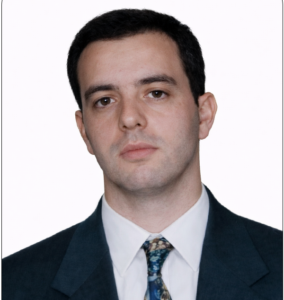
On July 22, 2024, Igbal Abilov, a citizen of Azerbaijan, was detained in the village of Bala Kolatan by officers of the State Security Service. According to Abilov’s relatives, he arrived in Azerbaijan on June 14 to attend his cousin’s wedding. On June 22, State Security officers who arrived in Bala Kolatan took Abilov to the Masally district State Security Department, where he was interrogated for 6 hours. On June 27, when he tried to fly from Baku to Bucharest (on his way to Belarus), he was not allowed to board the plane, and his passport and 2 phones were taken. On July 22, Abilov was again summoned to the Masally district State Security Department under the pretext of returning his passport and phones. However, without notifying his relatives, Abilov was taken to Baku.

After contacting the Ombudsman, his parents were informed that Abilov is suspected under articles 274 (high treason), 281.3 (public calls directed against the state, committed on the instructions of foreign organizations or their representatives), and 283.1 (incitement of national, racial, social, or religious hatred and enmity) of the Criminal Code of Azerbaijan.

According to Abilov’s relatives, he was detained on fabricated charges, and the real reason for his persecution is his research on various national minorities, including the Talysh of Azerbaijan.

On July 24, 2024, by court decision (decision number 4(009)-388/2024) in Baku, Igbal was placed under four-month arrest during the investigation without the possibility of seeing his relatives. It is also prohibited to share any documents associated with the case, even with relatives.

On July 31, 2024 an appeal of the decision number 4(009)-388/2024 was declined.

On August 7, 2024 a request to lift the ban on meetings and phone calls with family was denied.

On August 20, 2024 an appeal of the previous decision was denied.

On August 31, 2024 a request to transfer Igbal to house arrest was denied.

On February 26, 2025, the first court hearing in the case of Igbal Abilov took place.
The session was held in a closed format, with the judges participating online.

Subsequent hearings were held on March 7, May 2, and May 12, 2025. During these sessions, Igbal once again rejected all charges brought against him, firmly maintaining his innocence. The prosecution, in turn, requested 19 years of imprisonment.

On May 20, 2025, the court delivered its final verdict — 18 years of imprisonment.
Igbal Abilov was unjustly found guilty on all three charges originally brought against him under the Criminal Code of the Republic of Azerbaijan:

26/05/2025, Umbaki Detention Center – Igbal transferred to Umbaki Detention Center.
17/07/2025, Shirvan Court of Appeal – Preliminary review hearing held without Igbal or his
lawyers. The session was held online, and lawyers were not allowed to participate.
01/08/2025, Shirvan Court of Appeal – Appeal hearing postponed without prior notice.
Supporters learned of the postponement only upon arrival; lawyers were later confirmed by the
court secretary. Reason: prosecutor on vacation.
25/09/2025, Shirvan Court of Appeal – Hearing was announced as open but unexpectedly held
online due to lack of transport to bring Igbal to court. Insufficient time was available to consider
all motions; an additional hearing was scheduled.
02/10/2025, Shirvan Court of Appeal – Igbal was personally present for the first time since
November 2024. The hearing was closed to the public; he remained in handcuffs throughout.
Session ran past working hours, so another hearing was scheduled.
23/10/2025, Shirvan Court of Appeal – Appeal upheld the 18-year sentence. Lawyers prepared
documents for submission to the Supreme Court of Azerbaijan.
12/11/2025 – Igbal transferred to Correctional Facility No. 12 in Baku.

Igbal Abilov (born in 1989) is a scientific researcher, the chief editor of the “Herald of the Talysh National Academy,” and a member of the Talysh National Academy.

Click here for detailed biography of Igbal Abilov

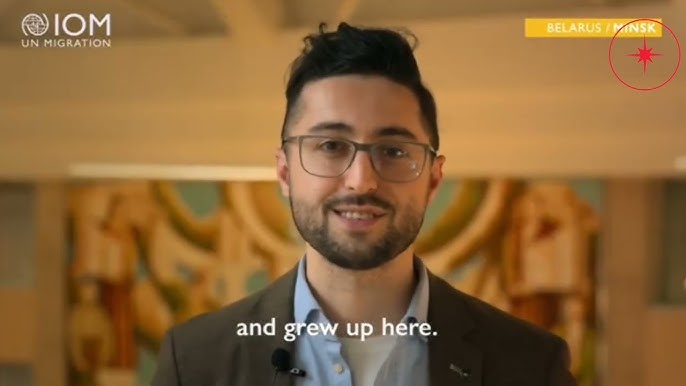
From early childhood, Igbal has lived in Belarus. In 2012, he graduated from the Faculty of International Relations of Belarusian State University. Then, continuing his academic activities, he completed his master’s degree (2013) and doctoral studies (2016) at the same faculty. For the next seven years, he taught at BSU and the Belarusian Institute of Law. He has publications in the fields of the history and ethnography of the South Caucasus, Turkey, and Iran.

He is the chief editor of “The Herald of the National Academy of Talysh” – an international scientific journal dedicated to the scholarly study of the Talysh. TNA is exclusively a scientific organization, does not participate in political activities, and does not make political statements.
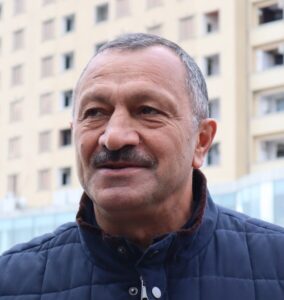
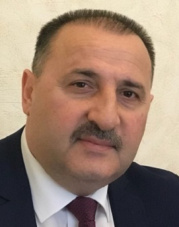
Imprisoned

Iqbal Shahin oglu Abilov

Early Life and Education

Igbal Abilov was born on December 12, 1989, in the village of Bala Kolatan, Masally District, Azerbaijan SSR, to a family of ethnic Talysh origin.[1]
He began his primary education at Bala Kolatan Secondary School, completing only the first grade there.[1]
At age seven, Abilov relocated with his parents to Minsk, Belarus, where he spent the remainder of his formative years and obtained his higher education.[1] [7]
He graduated with a bachelor's degree in 2012 and a master's degree in 2013 from the Faculty of International Relations at Belarusian State University.[1]
Abilov pursued doctoral studies at the same faculty from 2014 to 2017, with a dissertation on "Relations of Turkey with the States of the South Caucasus (2001-2015)", which he has yet to defend.[1]
His early exposure to Belarusian academic environments, combined with his Azerbaijani roots, informed his subsequent work on cross-cultural and regional historical topics.[7]
Academic Career

Research on Talysh History and Culture

Igbal Abilov, a historian and ethnographer specializing in the Talysh ethnic group who lectures at Belarusian State University, has focused his academic research on the historical development, linguistic heritage, and cultural traditions of this Iranian-speaking minority primarily residing in southern Azerbaijan and northern Iran.[8][2] His work documents the Talysh people's indigenous roots in the southeastern Caucasus, emphasizing ethnographic studies of their social structures, folklore, and customary practices amid historical interactions with Persian, Russian, and Soviet influences.[9]
As editor-in-chief of the Herald of the Talysh National Academy, Abilov has curated and promoted peer-reviewed articles on Talysh historiography, including analyses of pre-modern tribal confederations and 20th-century autonomy movements, such as the short-lived Talysh-Mughan Autonomous Republic established in 1993 amid post-Soviet ethnic tensions.[10][6] This journal serves as a platform for interdisciplinary scholarship, integrating linguistics, anthropology, and archival research to preserve Talysh oral histories and material culture against assimilation policies.[7] Abilov's contributions underscore the Talysh language's distinct Northwestern Iranian features, advocating for its standardization and educational use based on comparative philological evidence from ancient Median and Avestan sources.[11]
Abilov's ethnographic fieldwork, conducted prior to his 2024 detention, involved collecting primary data on Talysh kinship systems, religious syncretism blending Zoroastrian elements with Shia Islam, and artisanal traditions like weaving and metallurgy, often drawing from community elders in Lankaran and Astara regions.[12][4] These studies highlight causal factors in Talysh cultural resilience, such as geographic isolation in the Talysh Mountains, while critiquing Soviet-era Russification and post-independence Azerbaijani centralization for eroding minority identities—claims supported by declassified archives and census data showing Talysh self-identifiers numbering approximately 77,000 in 1926 and 76,841 by 1999, indicating persistent underreporting amid assimilation.[13][14] His research posits that culturally informed policies, rather than suppression, could mitigate ethnic grievances, aligning with international standards on indigenous rights under UN frameworks.[11]
Role in Talysh National Academy

Igbal Abilov co-founded the Talysh National Academy, a scholarly consortium dedicated to researching the history, language, and culture of the Talysh ethnic group indigenous to southeastern Azerbaijan and northwestern Iran.[15][16] As a non-political institution, the Academy promotes academic study and education on Talysh heritage without advocating separatism, focusing instead on ethnographic and historical documentation.[11]
Abilov served as editor-in-chief of the Academy's journal, The Herald of the Talysh National Academy, where he oversaw publications advancing Talysh linguistic and cultural scholarship.[15][10] In this capacity, he curated content emphasizing empirical research, including articles on Talysh folklore, dialects, and historical texts, contributing to the preservation of minority cultural knowledge amid limited institutional support in Azerbaijan.[17]
Additionally, Abilov held the position of research fellow and scientific associate at the Academy, conducting and coordinating studies on Talysh ethnography and history.[7] His work involved collaborating with other academics to compile data on Talysh oral traditions and archival materials, fostering a platform for indigenous scholarship independent of state narratives.[6] The Academy's efforts under his involvement have been recognized by international human rights and academic bodies as legitimate cultural preservation, distinct from political activism.[8]
Publications

Igbal Abilov has produced scholarly works focused on the history, ethnography, and culture of the Talysh people, an ethnic minority in Azerbaijan and Iran. His notable monograph, Essays on the History and Ethnography of the Talysh, published in 2011, examines the historical development and cultural practices of the Talysh, drawing on archival and ethnographic sources to document their indigenous heritage in the South Caucasus.[18]
As co-founder and chief editor of the Talysh National Academy since 2010, Abilov has overseen the publication of The Herald of the Talysh National Academy, an international peer-reviewed journal dedicated exclusively to scientific research on Talysh language, history, and ethnography, emphasizing non-political academic inquiry.[19] The academy under his editorial leadership initiated the “Bibliotheca Talyshica” series, with its inaugural volume—a comprehensive study of the Talysh language—released in July 2025, compiling linguistic analyses and grammars despite Abilov's detention.[20]
Abilov's contributions extend to editing multidisciplinary almanacs on Talysh studies, including an open call for articles issued by the Virtual Talysh National Academy in 2025 for a volume on Talysh heritage, which he continues to coordinate from prison, prioritizing empirical ethnographic data over advocacy.[21] His broader publications include articles on national minorities in the South Caucasus, Turkey, and Iran, though specific titles beyond the 2011 monograph remain primarily disseminated through academy channels rather than mainstream academic presses.[4]
Legal Case

Arrest and Initial Detention

Igbal Abilov, an ethnic Talysh scholar residing in Belarus, arrived in Azerbaijan in mid-June 2024 to visit family and attend a cousin's wedding.[22] On June 22, 2024, Azerbaijani security forces detained him for questioning, reportedly while he was conducting field research related to Talysh ethnography; he was released after approximately six hours without formal charges at that time.[16] [17]
On June 27, Abilov attempted to depart Azerbaijan for Belarus but was barred from boarding his flight, with his passport confiscated by authorities.[16] He was then formally arrested on July 22, 2024, upon arriving at a local police station to retrieve personal belongings, and transferred to a detention center in Baku, with his family not immediately notified of the detention.[16] [17] [6]
Two days later, on July 24, the Sabail District Court in Baku ordered Abilov remanded to pretrial detention for four months, prohibiting him and his lawyer from disclosing case documents to relatives or others.[17] During this initial period, Abilov was denied family visits and communication regarding his case, amid reports of restricted access to legal representation.[16] [17]
Charges, Trial, and Sentencing

Igbal Abilov was arrested on July 22, 2024, by Azerbaijani security forces in Astara after being summoned to a local police station under the pretext of retrieving personal items confiscated earlier.[4][23] On July 24, 2024, the Sabail District Court in Baku ordered four months of pretrial detention, citing charges of high treason under Article 113 of the Azerbaijani Criminal Code, foreign-agent-instructed public appeals against the state, and incitement of ethnic hatred.[4] Authorities alleged Abilov collaborated with Armenian security services, conducted Skype negotiations with Armenian academics including Garnik Asatryan of Yerevan's Russian-Armenian University, organized activities undermining Azerbaijan's territorial integrity, and incited ethnic enmity, based on intercepted communications deemed non-academic by prosecutors.[23]
Abilov's defense team appealed the detention order on July 31, 2024, and a related prohibition on sharing case documents, but both were denied by the court on August 7, 2024.[4] Pretrial detention was extended by four months on November 19, 2024, until March 22, 2025.[4] The trial commenced with virtual hearings at the Lankaran Serious Crimes Court on February 26, 2025, with Abilov participating remotely from the Kurdakhani pretrial detention center; the final hearing occurred on May 2, 2025, during which the prosecutor sought a 19-year sentence.[4][23]
On May 20, 2025, the Lankaran Court convicted Abilov of high treason, sentencing him to 18 years in prison while acquitting him on the incitement charge; his lawyers announced plans to appeal, maintaining that the communications in question were purely academic exchanges on Talysh and related linguistics with Asatryan and that no evidence supported treasonous intent.[4][23] Abilov himself described the accusations as "groundless" and "absurd" during the proceedings, emphasizing his scholarly focus on ethnic minority cultures without political aims.[23]
Government Justification

The Azerbaijani authorities maintained that Igbal Abilov's arrest on July 22, 2024, and his subsequent 18-year prison sentence, handed down by the Lankaran Court for Grave Crimes on May 20, 2025, were necessary to counter threats to national security and territorial integrity.[24][25] They accused him of high treason under Article 113 of the Criminal Code, asserting that his activities involved collaboration with foreign intelligence services, particularly those of Armenia, Azerbaijan's longstanding adversary in territorial disputes.[19] Additional charges included sedition under foreign instructions (Article 281.3) and incitement of national, racial, or religious hatred (Article 283), with officials claiming Abilov acted on directives to promote ethnic separatism among the Talysh minority, potentially destabilizing the state amid regional tensions.[25][19]
Pro-government media, such as Qavqazinfo.az, detailed the justification by alleging "secret transactions" with Armenian entities, including recorded conversations with Armenian academics that purportedly aimed to foment anti-state sentiment and ethnic division.[25] These claims framed Abilov's academic work on Talysh culture and history—conducted through the Talysh National Academy he co-founded—as a cover for subversive operations funded or directed externally, rather than legitimate scholarship. Authorities argued that such foreign-influenced incitement posed an existential risk, especially given historical Talysh autonomy movements and Armenia's alleged support for irredentist narratives in the South Caucasus.[25][3]
The government's position emphasized pretrial investigations uncovering evidence of Abilov's non-residency in Azerbaijan (he lived in Belarus) as facilitating covert ties, justifying extended detention and a closed trial to protect sensitive intelligence.[25][24] Officials portrayed the case as part of a broader defense against hybrid threats from adversaries exploiting ethnic minorities, aligning with Azerbaijan's post-2020 Nagorno-Karabakh recovery narrative where any perceived separatism is equated with treasonous betrayal.[25]
Controversies and Reception

Allegations of Separatism and National Security Threats

Azerbaijani authorities accused Igbal Abilov of treasonous activities that threatened national security, primarily through alleged collaboration with Armenian entities hostile to the state. Prosecutors claimed he conducted "secret negotiations and deals" via Skype with Garnik Asatryan, head of the Institute of Oriental Studies at the Russian-Armenian University in Yerevan, as part of "targeted work against Azerbaijan’s territorial integrity."[26] They further alleged that Abilov provided assistance to Vardan Voskanian and others linked to an Armenian special service organization, framing these contacts as efforts to undermine Azerbaijan's sovereignty amid ongoing regional tensions with Armenia.[26]
These charges were tied to separatism allegations, with state investigators asserting that Abilov's research on Talysh history and culture, combined with his meetings in Azerbaijan with ethnic Talysh individuals, aimed to organize activities attracting "disruptive forces" from foreign countries and incite division within the country.[26] Pro-government outlets like Qafqazinfo.az reported his involvement in actions that effectively promoted ethnic separatism by leveraging his role in the Talysh National Academy to challenge national unity.[26] The broader context involved heightened Azerbaijani sensitivity to ethnic minority activism following the 2023 resolution of the Nagorno-Karabakh conflict, where any perceived foreign-influenced agitation risked being interpreted as a security threat.
Abilov's defenders, including his family and international observers, contested these claims, arguing that his academic communications and cultural advocacy constituted legitimate scholarship rather than subversive intent.[26] United Nations experts highlighted the absence of "substantial evidence" linking his ethnic minority research to treason or separatism, describing the charges as a misuse of broad national security laws to suppress dissent.[3] Human Rights Watch similarly characterized the case as part of an escalating crackdown on critics, where academic work on minorities is reframed as a national security risk without verifiable proof.[27]
International Human Rights Responses

Amnesty International described Igbal Abilov's 18-year sentence on May 20, 2025, for high treason and related charges as based on "spurious" and "fabricated" accusations following an unfair trial lacking due process, issuing an urgent action appeal for his immediate release and highlighting the charges stemmed from scholarly exchanges misconstrued as collaboration with Armenia.[9] The organization further noted that Abilov's work on Talysh culture posed no threat to national security, framing the case as part of Azerbaijan's broader suppression of ethnic minority expression.[28]
In October 2025, United Nations human rights experts, including special rapporteurs on cultural rights and freedom of opinion, urged Azerbaijani authorities to release Abilov and fellow researcher Bahruz Samadov, asserting their detentions violated international standards on arbitrary arrest and the right to academic freedom, with no evidence of genuine security risks presented.[3] Scholars at Risk, an international academic advocacy group, echoed this in July 2025, marking one year since Abilov's July 2024 arrest and demanding his release as retaliatory for ethnic minority research, emphasizing the politicized nature of the prosecution.[4]
Human Rights Watch contextualized Abilov's arrest on July 22, 2024, within Azerbaijan's escalating crackdown on critics, including ethnic activists, reporting online harassment labeling him a "traitor" prior to detention and criticizing the government's use of treason charges to silence dissent without substantiating threats.[27] The European Parliament, in a December 2025 resolution, denounced the arbitrary arrest and sentencing of Abilov alongside Samadov as emblematic of human rights violations in Azerbaijan, calling for their unconditional release and an end to judicial weaponization against scholars.[29] Additional appeals came from entities like the Human Rights Committee of the Royal Swedish Academy of Sciences in September 2025, which petitioned for Abilov's freedom citing the fabricated basis of his imprisonment during a family visit from Belarus.[15] These responses collectively portrayed the case as a suppression of minority cultural advocacy rather than a legitimate security measure, though critics of such organizations have questioned their selective focus on Azerbaijan amid regional geopolitical tensions.
Broader Context of Ethnic Minority Activism in Azerbaijan

Azerbaijan's ethnic minorities, including the Talysh in the south and Lezgins in the north, constitute roughly 5-10% of the population according to official estimates, though activists dispute these figures as undercounts to minimize perceived threats.[30][31] The Talysh, numbering around 80,000 per government data but up to 500,000-1 million by activist claims, have pursued cultural and linguistic preservation amid fears of assimilation into the Azeri majority.[31] Lezgins, estimated at 180,000 or 2% of the population in the 2011 census, similarly advocate against marginalization through groups like Sadval, which emerged in the 1990s to address discrimination in employment, education, and political representation.[32] Activism often centers on demands for minority-language schooling, media access, and cultural autonomy, but escalates into calls for federalism or self-governance during periods of instability.
Post-Soviet transitions intensified these movements, with the Talysh declaring the Talysh-Mughan Autonomous Republic on June 21, 1993, in seven southeastern districts amid the Nagorno-Karabakh war's chaos; the entity lasted until August, when Azerbaijani forces retook control, arresting leaders like Alikram Humbatov on treason charges.[33] This event, lacking broad ethnic support, nonetheless entrenched government suspicions of Iranian-backed separatism, given the Talysh's cross-border ties with northern Iran.[34] Northern minorities, including Lezgins and Avars, formed organizations like the Lezgin National Council in the early 1990s, protesting border demarcations with Dagestan that split communities and limited cross-border cultural exchanges.[30] By 2007, exiled Talysh leaders established the National Talysh Movement in the Netherlands, focusing on diaspora advocacy for language rights and historical recognition, while domestic efforts faced surveillance and bans.[35]
The Azerbaijani government responds to such activism as existential threats to territorial integrity, enacting laws restricting "ethnic propaganda" and conducting arrests under articles on separatism or incitement, as seen in periodic crackdowns on Talysh cultural gatherings labeled as subversive.[36] Policies prioritize Azeri-language education, contributing to the decline of minority tongues—Talysh and Lezgin are rarely taught beyond informal settings, with activists reporting school closures and textbook shortages as deliberate assimilation tools.[37] While official narratives emphasize inclusive citizenship and economic integration, empirical data from human rights monitors indicate disproportionate policing of minority regions, with Lezgins facing recruitment pressures into border units and Talysh communities enduring land disputes framed as national security issues.[38] This approach mirrors broader authoritarian controls, where ethnic demands intersect with general suppression of civil society, though proponents argue it prevents fragmentation akin to Yugoslavia's dissolution.[39]
References
https://igbal.info/en/bio
https://epthinktank.eu/2025/07/16/detention-of-academic-igbal-abilov-in-azerbaijan-answering-citizens-concerns/
https://www.ohchr.org/en/press-releases/2025/10/azerbaijan-un-experts-urge-release-researchers-igbal-abilov-and-bahruz
https://www.scholarsatrisk.org/2025/07/release-academic-igbal-abilov-wrongfully-imprisoned-for-one-year/
https://www.amnesty.org/en/documents/eur55/0295/2025/en/
https://www.historians.org/news/aha-sends-letter-to-the-president-of-azerbaijan-expressing-concern-for-jailed-historian/
https://talyshfund.org/reports
https://www.scholarsatrisk.org/actions/igbal-abilov-azerbaijan/
https://www.amnesty.org/en/wp-content/uploads/2025/09/EUR5502952025ENGLISH.pdf
https://www.balcanicaucaso.org/en/cp_article/azerbaijan-more-repression-the-abilov-case/
https://docs.un.org/en/A/HRC/59/NGO/38
https://pace.coe.int/news/9898/azerbaijan-pace-general-rapporteur-deplores-sentencing-of-a-talysh-academic-to-18-years-in-prison
https://www.amnesty.ie/azerbaijan_academics_sentenced_on_spurious_charges_of_treason/
https://onlinelibrary.wiley.com/doi/10.1111/nana.13098
https://www.kva.se/en/news/the-human-rights-committee-appeals-for-the-release-of-imprisoned-scholar-in-azerbaijan/
https://www.amnesty.org.uk/urgent-actions/academics-arrested-fabricated-charges
https://www.scholarsatrisk.org/2025/05/release-wrongfully-imprisoned-academic-igbal-abilov/
https://www.concernedhistorians.org/ca/110f1.pdf
https://igbal.info/
https://www.meydan.tv/en/article/imprisoned-scholar-igbal-abilovs-book-on-the-talysh-language-released/
https://www.instituteforhumanrights.org/post/iqbal-abilov-to-edit-talysh-studies-almanac-from-prison
https://www.demandrightsatcop.org/iqbal-abilov
https://oc-media.org/talysh-researcher-abilov-sentenced-to-18-years-in-prison-in-azerbaijan/
https://www.amnesty.org/en/wp-content/uploads/2025/06/EUR5595452025ENGLISH.pdf
https://www.hrw.org/report/2024/10/08/we-try-stay-invisible/azerbaijans-escalating-crackdown-critics-and-civil-society
https://oc-media.org/talysh-researcher-arrested-for-treason-in-azerbaijan/
https://www.hrw.org/news/2024/08/30/azerbaijan-escalating-crackdown-critics
https://www.amnesty.org.uk/urgent-actions/academics-sentenced-spurious-charges-treason
https://www.europarl.europa.eu/news/cs/press-room/20251211IPR32170/human-rights-violations-in-azerbaijan-nigeria-and-guinea-bissau
https://minorityrights.org/country/azerbaijan/
https://www.ecoi.net/en/document/1399964.html
https://onlinelibrary.wiley.com/doi/10.1111/nana.70028?af=R
https://jamestown.org/talysh-issue-dormant-in-azerbaijan-reopened-in-armenia/
https://bbcrussian.substack.com/p/azerbaijan-ethnic-minorities-coexistence
https://unpo.org/downloads/2362.pdf
https://jam-news.net/separatism-charges-against-talysh-in-azerbaijan-who-is-threatened-by-lankon/
https://eurasianet.org/azerbaijani-minority-activists-strive-to-keep-their-languages-alive
https://www.hrw.org/world-report/2025/country-chapters/azerbaijan
https://www.state.gov/reports/2024-country-reports-on-human-rights-practices/azerbaijan

Category
Intellectual
Arrest date
2024-07-22
Arrest Count
1
Location
Pre-trial Detention Center at the Umbaki settlement in Baku City Qaradaq District
Region
Azerbaijan
Last updated
2026-05-13

Charges

Articles 274 (High treason), 281.3 (Public appeals to violent capture of authority, violent deduction of authority or violent change constitutional grounds or infringement of territorial integrity of the Republic of Azerbaijan, committed by orders of foreign organizations or their representatives) and 283.1 (The actions directed on excitation of national, racial, social or religious hate and hostility, humiliation of national advantage, as well as actions directed on restriction of citizens rights, or establishment of the superiority of citizens on the basis of their national or racial, social belonging, creeds committed publicly, including with use of mass media) of the Criminal Code of the Azerbaijan Republic.

Public sources