EU Expands Sanctions Against Russia Targeting Defense Sector and “Shadow Fleet”
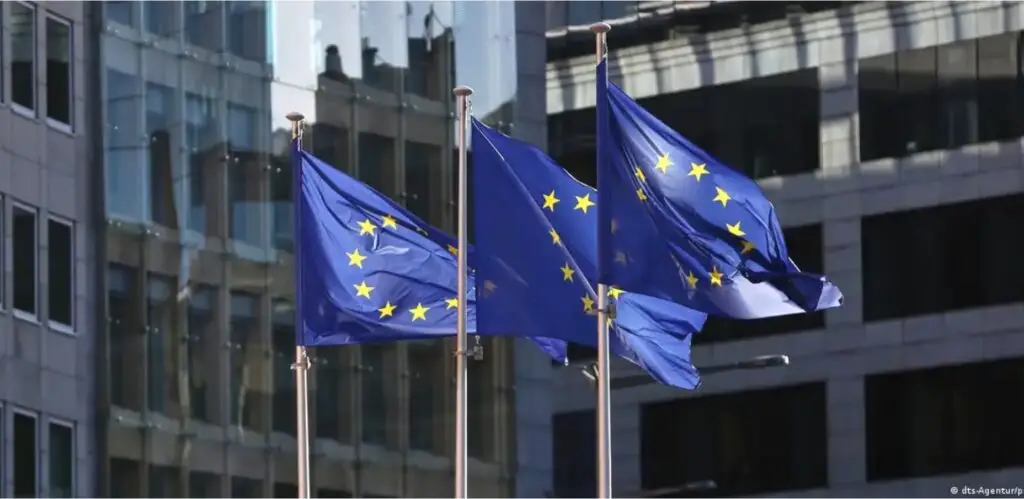
The Council of the European Union has expanded its sanctions list related to Russia’s war against Ukraine, adding 34 individuals and 47 legal entities, the EU Council announced on Monday.
According to Brussels, the new measures are aimed at further restricting Russia’s military-industrial complex, reducing revenues from energy exports by targeting the so-called “shadow fleet,” countering hybrid threats and state propaganda, and addressing alleged systematic human rights violations in Russia.
EU High Representative for Foreign Affairs and Security Policy Kaja Kallas said Western sanctions had already cost Russia an estimated €1–1.3 trillion.
“Brick by brick, we are dismantling the foundations of Russia’s war economy,” Kallas said.
Sanctions target Russia’s military industry
The latest package includes restrictions against seven individuals and 21 entities accused of supporting Russia’s defense sector or assisting it through third countries.
The sanctions target producers of drones and other military equipment allegedly supplied to the Russian armed forces, including organizations such as NPO Lavochkin, ASFPG, IONOS, Rustakt, China-based companies Shenzhen Minghuaxin and Xinxiang Richful Lubricant Additive Company, as well as Russia’s ERA military innovation technopolis and the Advanced Research Foundation.
Measures against Russia’s “shadow fleet”
The EU also added two individuals and 24 companies linked to Russian oil and petroleum product exports, including activities involving the so-called “shadow fleet” — vessels used to bypass international restrictions.
Among those sanctioned are Azerbaijani businessman Tahir Garayev and Russian national Konstantin Rogach. The list also includes companies registered in Russia, Liberia, Turkey, the United Arab Emirates, Azerbaijan, and Hong Kong.
Crimea-related sanctions extended
The Council of the EU also extended restrictive measures imposed over Russia’s annexation of Crimea and Sevastopol until June 23, 2027.
Brussels reiterated that the EU would continue providing political, financial, economic, humanitarian, military, and diplomatic support to Ukraine.
The EU also welcomed diplomatic efforts aimed at ending the war, while calling on Russia to agree to a “full, unconditional and immediate ceasefire” and engage in negotiations for what it described as a just and lasting peace.