
Religious Prisoner Sent to Punishment Cell After Objecting to Alleged Beating of Inmate
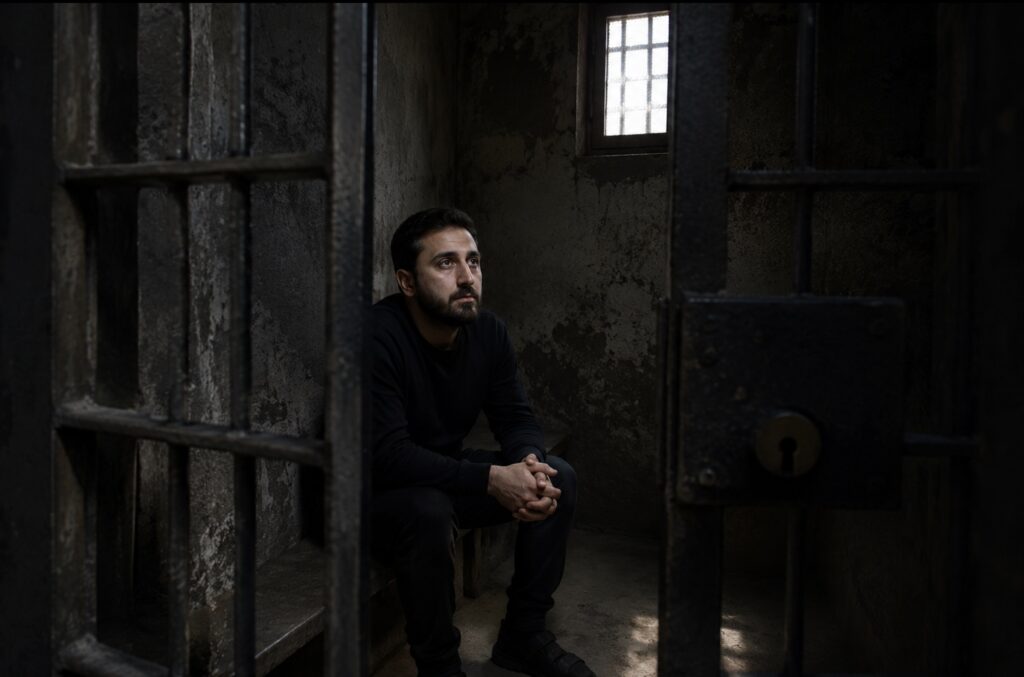
Religious prisoner Mansur Valishov, who is being held at the Lankaran Penitentiary Complex, has been placed in a punishment cell, commonly known as “kars,” according to information provided by his family.
Human rights advocate Arzu Abdulla, who monitors cases involving imprisoned religious believers, reported the development based on information from Valishov’s relatives.
According to his wife, Valishov was expected to call his family on July 20, but they received no news from him. After making inquiries, the family learned that he had been transferred to a punishment cell.
Relatives said the Penitentiary Service hotline informed them that Valishov had been disciplined for allegedly violating internal prison regulations. However, officials did not specify which rule he was accused of breaking.
The family claims that Valishov was punished after protesting the alleged beating of another prisoner who was in poor health.
His relatives believe the disciplinary measure may be intended to create grounds for transferring him back to the closed-regime prison at the Umbaki Penitentiary Complex.
Valishov was detained by officers of the Imishli District Police Department in March 2023. He was charged under a provision of the Criminal Code concerning the large-scale illegal manufacture, acquisition, possession, transportation, distribution or sale of narcotic drugs and psychotropic substances.
The Lankaran Court for Grave Crimes sentenced him to six years in prison.
Valishov denies the charges and says he was prosecuted because of his religious beliefs.
The 2026 political prisoner list published by the Union for the Freedom of Political Prisoners of Azerbaijan includes 182 religious believers. Human rights defenders say many of them belong to the Shia Muslim community and that some were imprisoned on drug-related charges.
The Azerbaijani authorities reject allegations of religiously motivated prosecution and maintain that those convicted were held accountable for criminal offenses rather than for their religious activities.