The Long Arm of Authoritarian Regimes Beyond Borders: An Interview with Constantinos Efstathiou
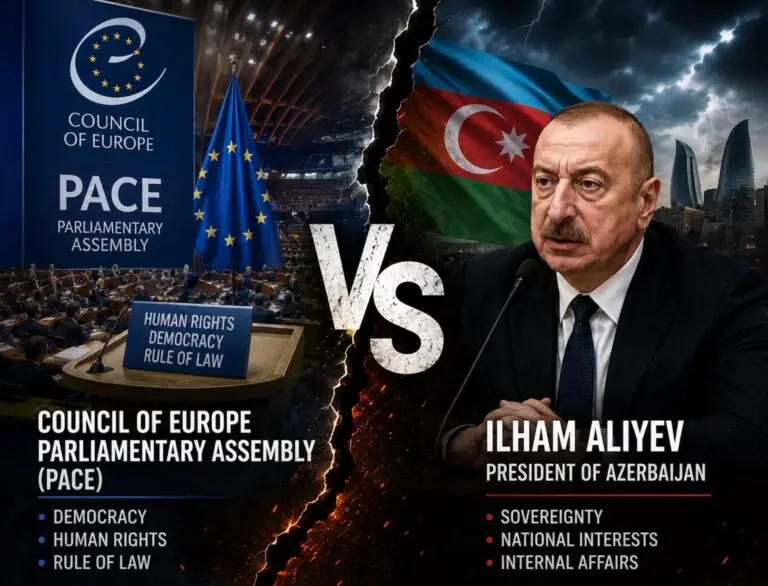
Authoritarian regimes are no longer targeting critical voices only within their own borders. Journalists, human rights defenders, political activists, and government critics living in exile are increasingly being pressured through threats, surveillance, fabricated criminal cases, in absentia convictions, pressure on family members, and the misuse of international legal mechanisms.
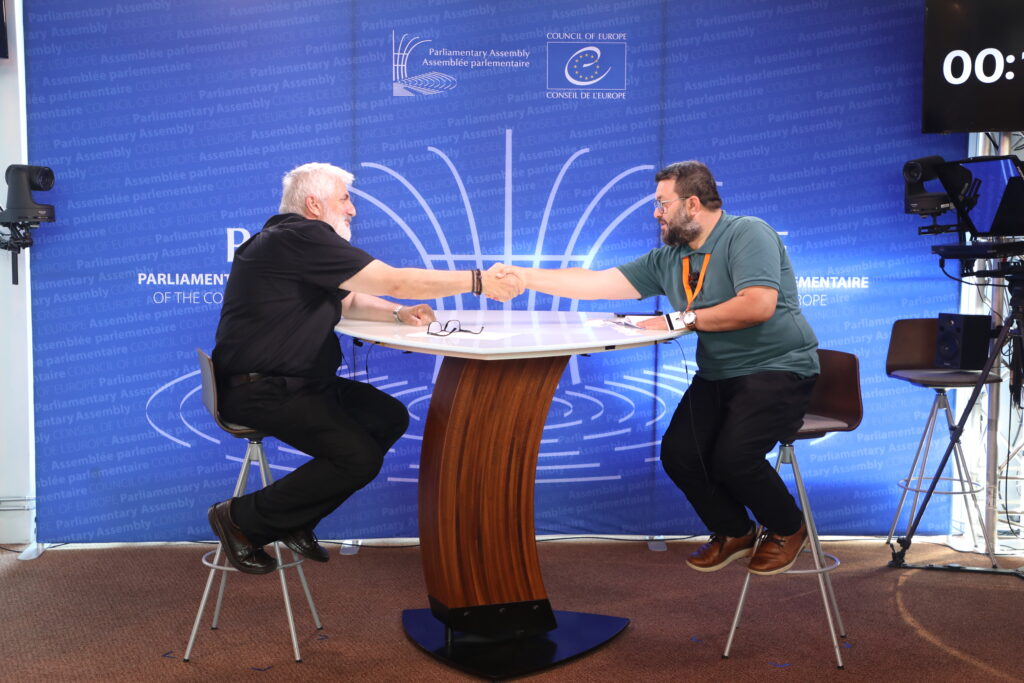
Caspian Watch founder Abid Gafarov discussed this issue with Constantinos Efstathiou, a member of the Parliamentary Assembly of the Council of Europe from Cyprus and rapporteur on transnational repression.
The interview focused on the threat that transnational repression poses to Europe’s legal space, politically motivated extradition requests, the abuse of Interpol mechanisms, pressure on the families of exiled activists, targeted sanctions, and the responsibility of democratic states in their relations with repressive regimes.
Efstathiou stressed that democratic countries must not blindly comply with politically motivated legal requests or allow themselves to become part of the persecution mechanisms of repressive governments.
We present the interview.
Interview Transcript
Abid Gafarov:
Hello, dear viewers. I am Abid Gafarov, founder of the Caspian Watch platform. Today, against the backdrop of the work of the Parliamentary Assembly of the Council of Europe, we are discussing an important issue: transnational repression and the protection of critical voices living abroad.
Our guest is Mr. Constantinos Efstathiou, a member of PACE from Cyprus and rapporteur on the issue of transnational repression. Mr. Efstathiou, thank you for taking the time to speak with us and for agreeing to discuss this important topic.
Constantinos Efstathiou:
Thank you. I appreciate the invitation. This issue is not only the problem of one country or one group of people. Transnational repression has become a serious matter that directly affects Europe’s legal space, democratic security, and human rights system. That is why it is very important to talk about it and to look for concrete solutions.
Abid Gafarov:
In your report, transnational repression is presented as a growing threat to democracy and the rule of law. In your view, why have authoritarian regimes become more emboldened in recent years? Why do they feel increasingly free to target journalists, activists, and government critics even after they have left the country?
Constantinos Efstathiou:
There are several reasons for this. First of all, authoritarian regimes have understood that when critical voices leave the country, it does not mean those voices have been silenced. On the contrary, once journalists, human rights defenders, and political activists are abroad, they often begin to speak from a safer environment, bring facts to an international audience, and shape public opinion. This worries authoritarian governments.
The second reason is the climate of impunity. If a regime sees that threats, surveillance, pressure on family members, fabricated criminal cases, or the misuse of international legal mechanisms against critics living abroad do not lead to serious consequences, it becomes more inclined to continue such practices. The problem lies not only with repressive states, but also with the fact that democratic countries sometimes react too late, too weakly, or in a fragmented manner.
A third important point is that these forms of repression are not limited to physical violence. They are also carried out through legal, digital, diplomatic, and psychological tools. There are cases involving the misuse of Interpol notices, extradition requests, banking and financial systems, online surveillance, and the exposure of personal data. All of these methods are designed to create fear among critical voices, silence the diaspora, and suppress public debate.
Abid Gafarov:
What concrete tools should Council of Europe member states use to protect activists, journalists, and human rights defenders living abroad? Which measures are more important: stronger national legislation, targeted sanctions, restrictions on diplomatic abuse, Interpol reform, or stronger protection mechanisms for victims?
Constantinos Efstathiou:
I do not see this as a choice between one tool and another. What is needed is a comprehensive and coordinated approach. The first step is to establish a clear legal understanding of transnational repression. States must recognize this phenomenon not merely as isolated criminal incidents, but as a systematic mechanism of pressure carried out by foreign states for political purposes.
The second step is to create concrete protection mechanisms in national legislation. Law enforcement agencies, prosecutors, courts, and migration authorities must understand what transnational repression is. They should be trained to identify such cases and to take victims’ complaints seriously. There must be dedicated reporting channels, trusted contact points, and secure mechanisms through which victims can provide information.
The third issue is preventing the abuse of international legal cooperation tools. Interpol notices, extradition requests, and mutual legal assistance mechanisms must not be used for political persecution. If there are serious indications that a request concerning an individual is politically motivated, democratic states must not treat it as a purely technical legal procedure. They must assess it in the context of human rights.
The fourth issue is targeted sanctions. Visa bans, asset freezes, and other individual restrictions may be imposed on officials, representatives of security agencies, prosecutors, judges, and others involved in transnational repression. Such measures weaken the sense of impunity and strengthen the principle of personal accountability.
Abid Gafarov:
In recent years, criminal cases, arrest warrants, and in absentia convictions have been issued against Azerbaijani activists, journalists, and government critics living in Europe. In your view, can this be considered a form of transnational repression? How should European states respond when such legal tools appear to be politically motivated?
Constantinos Efstathiou:
If legal mechanisms are used not for genuine criminal prosecution, but to intimidate critical voices, restrict their freedom of movement, weaken their international status, or silence them, then this must be assessed in the context of transnational repression. The main issue is not the formal name of the document, but its substance and purpose.
In absentia convictions, international search requests, extradition demands, and other legal mechanisms are sometimes presented to democratic countries as ordinary legal cooperation. However, if the individuals concerned are being targeted because of their journalistic work, political views, human rights advocacy, or criticism of the government, European states must act with great caution.
Automatic cooperation in such cases is unacceptable. States must examine the possibility of political motivation and take into account the person’s safety, their right to a fair trial, and the risks they may face if returned. The principle of non-refoulement — meaning that a person must not be returned to a place where they face the risk of torture, inhuman treatment, or political persecution — is particularly important here.
My position is that democratic states must not become executors of transnational repression. If they blindly comply with politically motivated requests, they may effectively become instruments in the hands of repressive regimes.
Abid Gafarov:
Azerbaijani critics in exile often say that pressure is directed not only against them personally, but also against their family members who remain in Azerbaijan. Relatives are threatened, summoned by the police, interrogated, and sometimes face arrest or other forms of intimidation. Should the Council of Europe also recognize pressure on family members as part of transnational repression?
Constantinos Efstathiou:
Yes, I believe this must absolutely be considered part of transnational repression. The aim of repression is not only to harm the physical safety of a specific individual. Its purpose is to silence that person, limit their public activity, exert psychological pressure, and create an atmosphere of fear around them.
Pressure on family members is used as a very effective and very cruel tool. A journalist or activist living abroad may feel relatively safe, but when they believe that their family, parents, spouse, children, or close relatives are in danger, this directly affects their freedom of expression. It is a form of invisible censorship.
That is why the Council of Europe and its member states must treat pressure on family members as a separate and serious indicator. This factor should be taken into account in asylum procedures, security assessments, and investigations related to transnational repression. When repressive regimes cannot directly target a person abroad, they sometimes put pressure on that person’s relatives inside the country. This mechanism must not be ignored.
Abid Gafarov:
If domestic repression, the problem of political prisoners, and pressure on critics abroad are all continuing in Azerbaijan at the same time, what message should PACE send to the Azerbaijani authorities? Should stronger consequences, including targeted sanctions against those involved in these practices, be placed on the agenda?
Constantinos Efstathiou:
The message must be clear: human rights, the rule of law, and democratic obligations are not optional. Membership in the Council of Europe is based on certain values. If a state systematically violates those values and targets journalists, human rights defenders, political opponents, and critics, a response limited to diplomatic concern is not enough.
Within PACE and the broader framework of the Council of Europe, political, legal, and institutional response mechanisms must be strengthened. As long as repressive practices continue, there must be not only general appeals, but also concrete consequences. This includes stronger monitoring, greater political accountability, demands for the implementation of international legal obligations, and, where necessary, individual targeted measures.
Regarding targeted sanctions, the principle should be this: not collective punishment, but personal responsibility. If specific officials, judges, prosecutors, representatives of security agencies, or other actors are involved in political persecution, in absentia convictions, fabricated charges, pressure on family members, or transnational repression, they should not be able to move freely and benefit from Europe’s democratic space.
Most importantly, Azerbaijani society must not be forgotten. This is not only about relations between governments. It is about people — journalists, families, political prisoners, human rights defenders, and those who take risks for free expression. The response of the Council of Europe must show these people that their voices are heard and that their rights remain on the international agenda.
Abid Gafarov:
Mr. Efstathiou, thank you for sharing your views on this important issue and for your work in combating transnational repression and protecting critical voices. I hope these discussions will contribute to more concrete and effective action in Europe.
Constantinos Efstathiou:
Thank you as well. Raising public awareness on this issue is extremely important. Combating transnational repression is not only the work of governments and international organizations. Civil society, journalists, and the democratic public are also an essential part of this process.
Editor’s note: This text has been edited for clarity, flow, and readability while preserving the meaning and substance of the interview.