Jailed Journalist Aytac Tapdig Says Thousands of Prisoners Are Denied Proper Medical Care
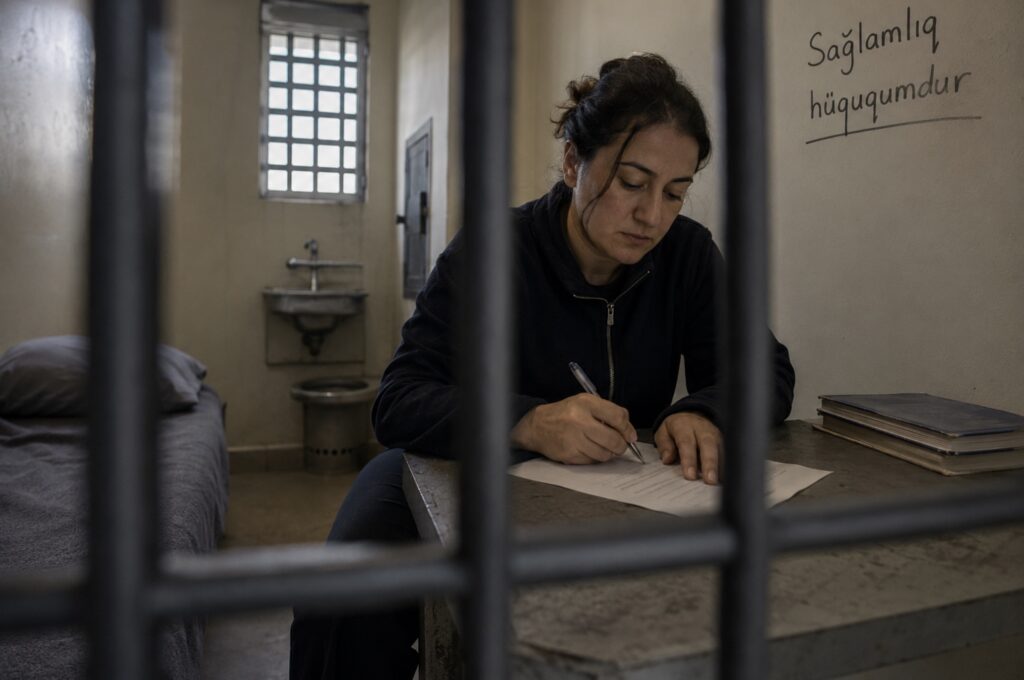
Azerbaijani journalist Aytac Tapdig, who is being held in connection with the so-called Meydan TV case, says she and thousands of other detainees are being denied access to essential medical examinations and specialist treatment.
In a letter written from the Baku Pre-Trial Detention Centre, Tapdig described serious breathing difficulties and said she had become heavily dependent on nasal drops during her detention.
“During the 20 months I have been imprisoned, I have used 80 bottles of nasal drops. Because of shortness of breath, I am now completely dependent on this medicine. I use almost one bottle every week,” she wrote.
Tapdig said she carries the medication with her at all times because going without it creates a feeling of suffocation.
“Those who have this type of dependency know that without the drops, you begin to feel as though you are choking and your breathing is about to stop,” she said.
According to the journalist, she did not use the medication so intensively before her imprisonment. She believes that prolonged confinement, lack of fresh air and the damp environment at the detention centre have significantly worsened her condition.
Tapdig said the facility was built on the site of a drained lake and claimed that the resulting humidity contributes to her breathing problems.
Her lawyer, Javad Javadov, submitted requests to the Main Medical Department of the Penitentiary Service and to the Penitentiary Service itself, asking that Tapdig be examined by an ear, nose and throat specialist and receive any other necessary medical treatment.
However, according to Tapdig, her lawyer received no official response.
Following the appeal, she was taken to the first floor of the detention centre’s medical unit and met its chief physician, Vugar Hasanov. She said the doctor informed her that the Justice Ministry did not employ a full-time ear, nose and throat specialist.
Tapdig questioned how the entire penitentiary system could operate without a specialist capable of treating thousands of prisoners and detainees.
“This raises serious questions about whether the state truly protects their right to life,” she wrote. “By imprisoning people, the state does not only deprive them of their freedom. It also takes away such fundamental rights as access to medical examinations.”
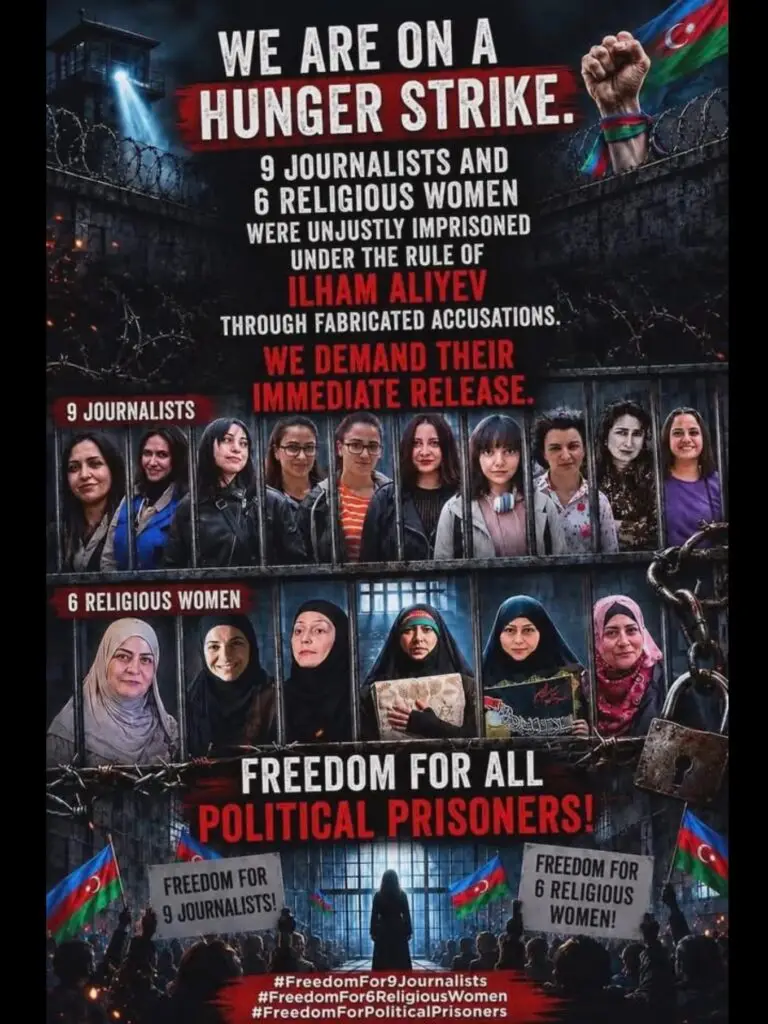
Tapdig is one of six female journalists detained in the Meydan TV case. Although they are held on the second floor of a building where medical personnel work, she said this has not ensured meaningful access to healthcare.
She claimed that the Main Medical Department of the Penitentiary Service lacks doctors in several specialist fields.
Tapdig noted that Jamil Kamilli, who has reportedly headed the department for the past two years, is himself a physician and should therefore be familiar with the shortages. However, she said no visible progress had been made in recruiting qualified medical personnel.
“The Ministry of Justice continues to ignore the suffering of thousands of prisoners,” she wrote.
According to Tapdig, the six detained female journalists have undergone only one gynecological examination during their imprisonment, arranged after an appeal by Meydan TV editor-in-chief Aynur Elgunash.
She added that hundreds of other female prisoners held in the same building had not been given access to such examinations.
Tapdig also said prisoners had recently been told that the penitentiary medical system did not have a urologist or dermatologist available, despite repeated requests from detainees.
She described a system in which prisoners suffering from various illnesses call the duty doctor and receive painkilling injections instead of proper diagnosis and treatment.
“The detention centre sees this as a temporary solution and considers the matter closed,” she wrote.
Tapdig recalled that one of her former cellmates suffered from kidney pain and survived on injections administered almost every day.
She warned that imprisonment itself creates a serious risk of lasting health damage, as constant stress, psychological pressure and poor detention conditions weaken the human body and make detainees more vulnerable to illness.
Tapdig called on the Ministry of Justice to end what she described as deliberate indifference and to recruit qualified specialist doctors for the Penitentiary Service’s Main Medical Department.
She also referred to Azerbaijan’s obligations under international law, including the United Nations Standard Minimum Rules for the Treatment of Prisoners, known as the Nelson Mandela Rules, as well as standards established by the European Committee for the Prevention of Torture.
These standards require states to ensure that people deprived of their liberty receive adequate, timely and professional medical care.