Christophe Lacroix Speaks to Caspian Watch: “We Are No Longer Merely Speaking of an Authoritarian State, but of a Totalitarian Model”
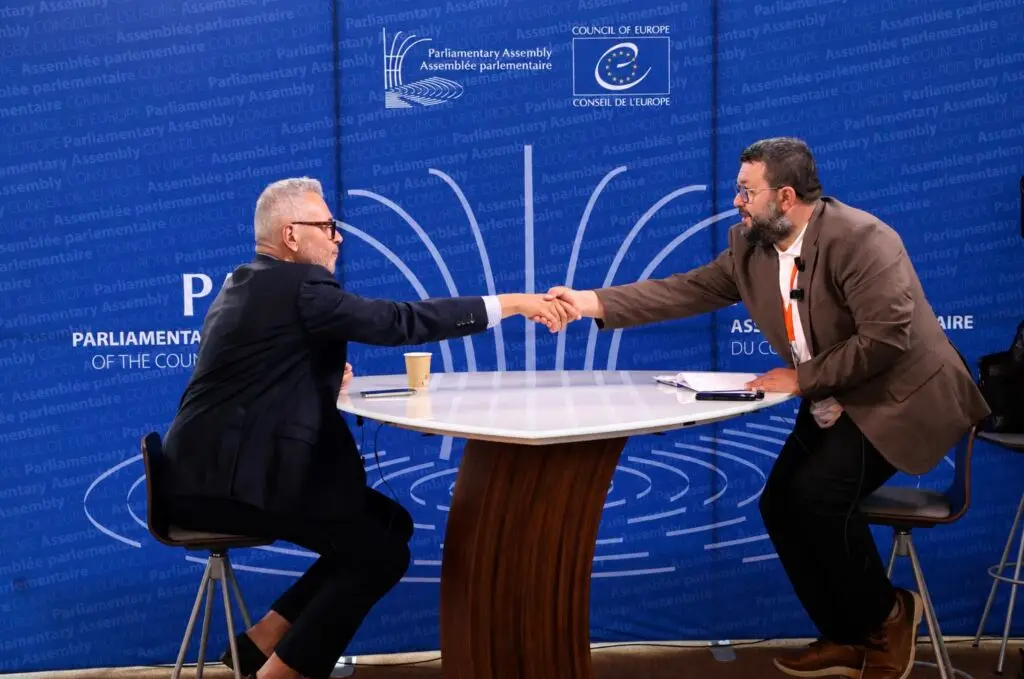
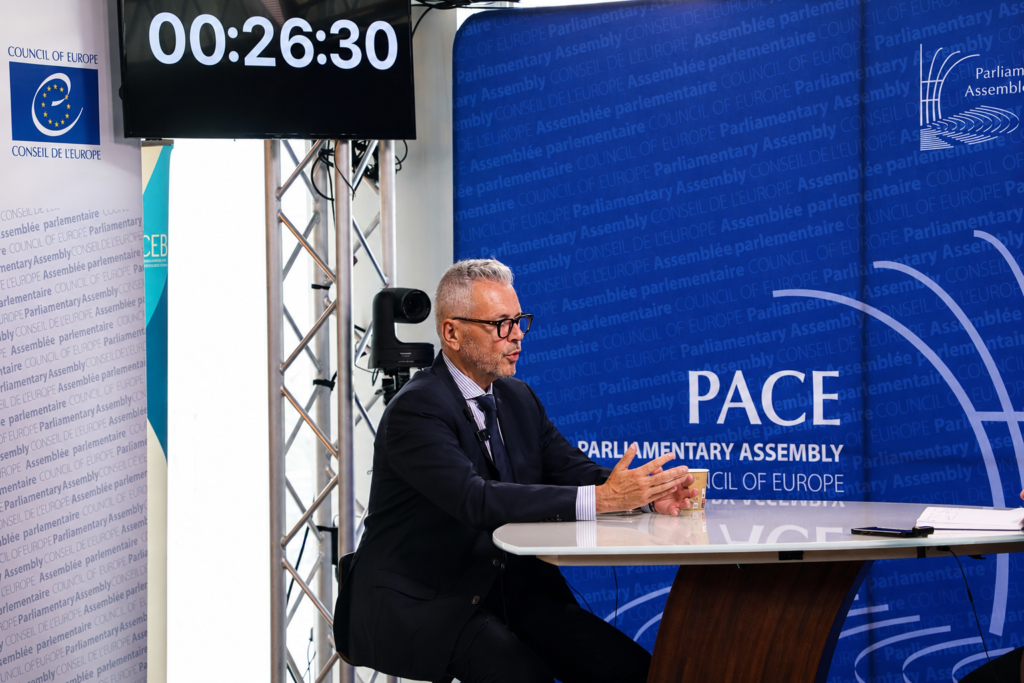
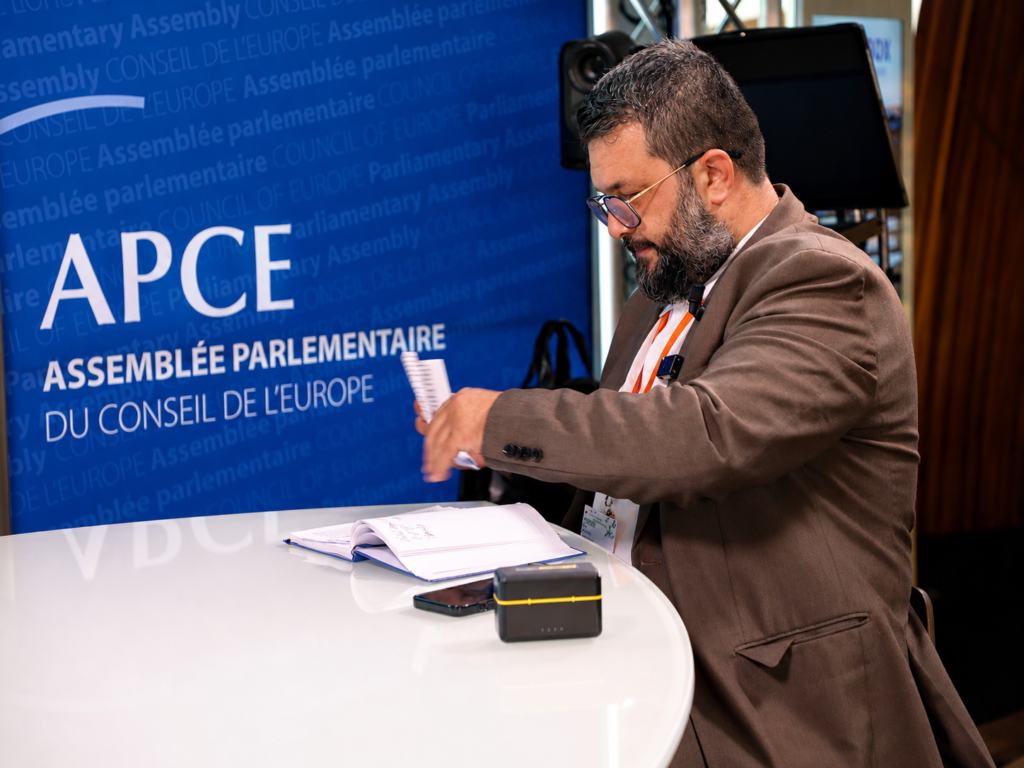
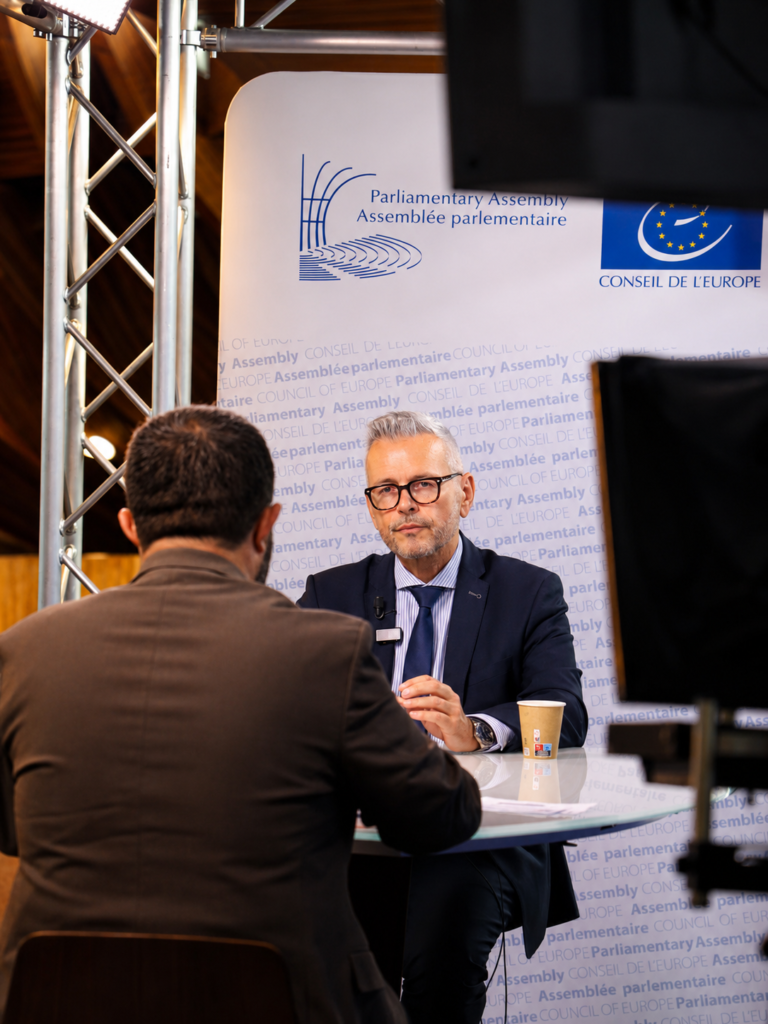
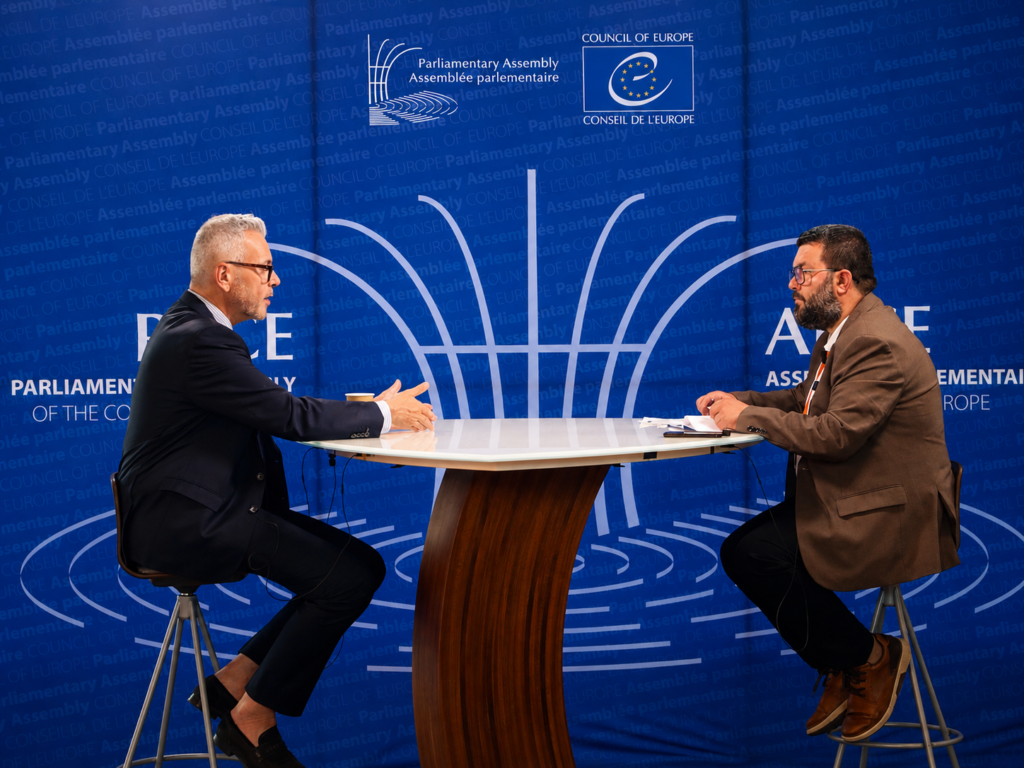
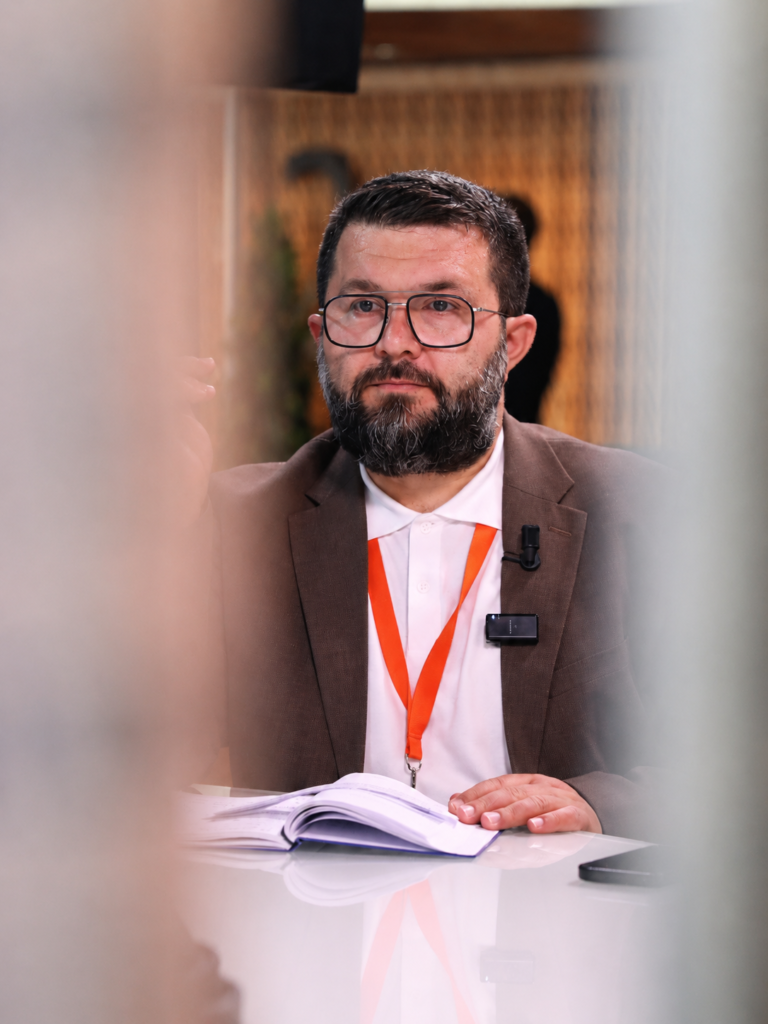
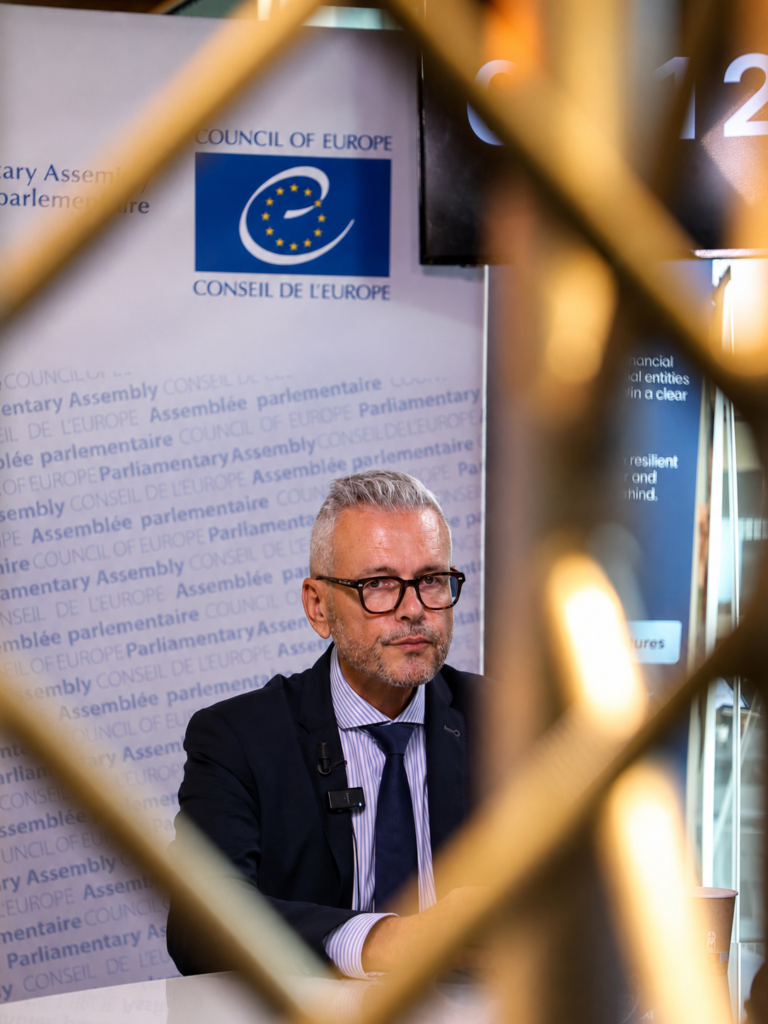
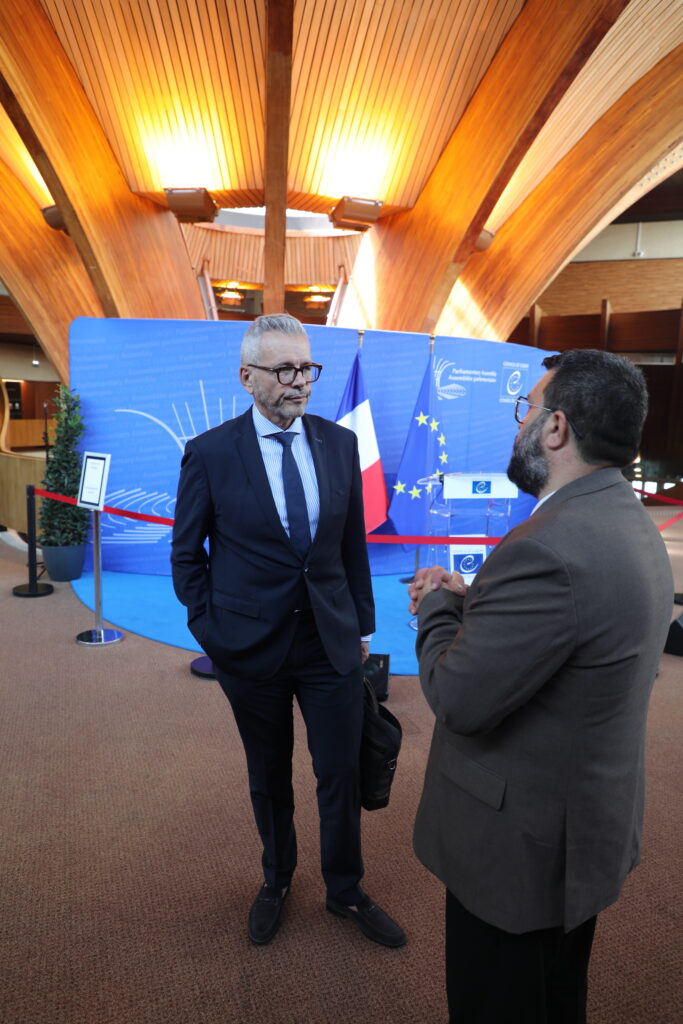
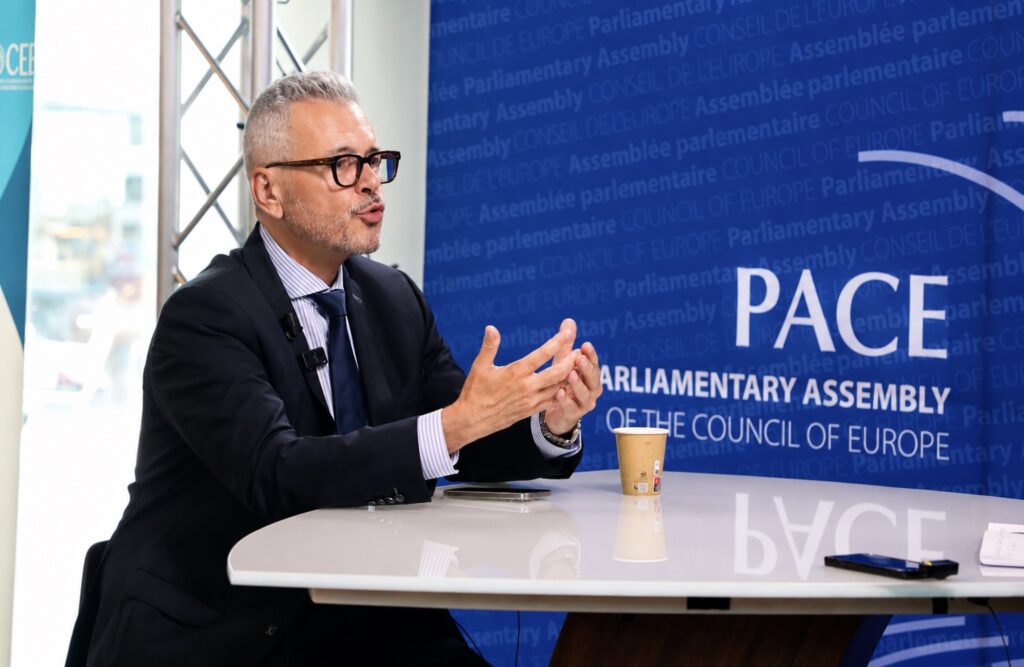
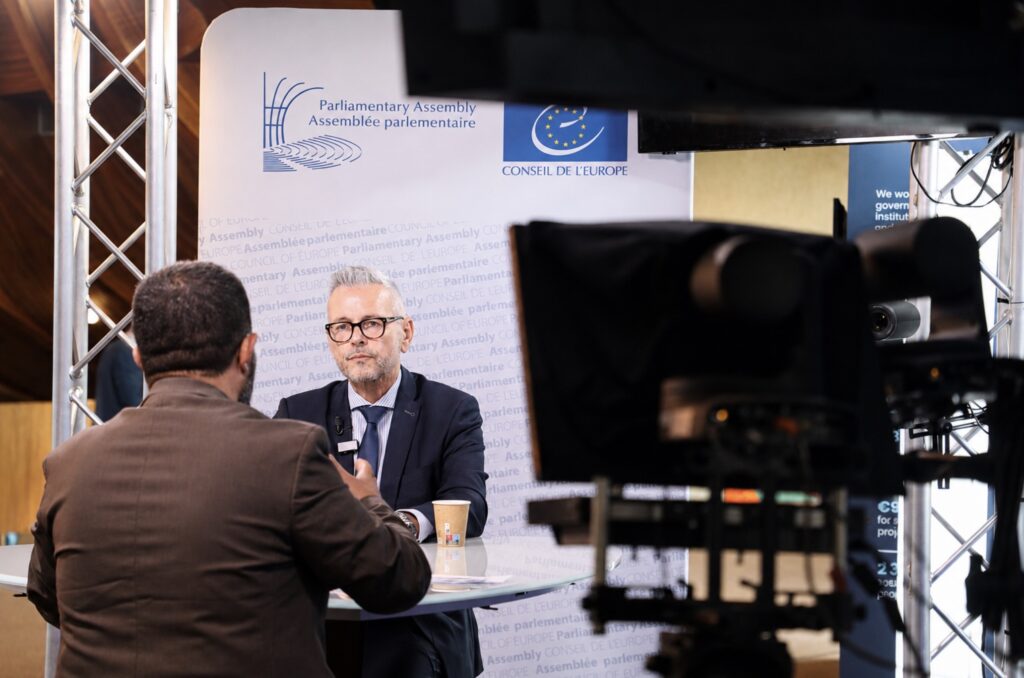
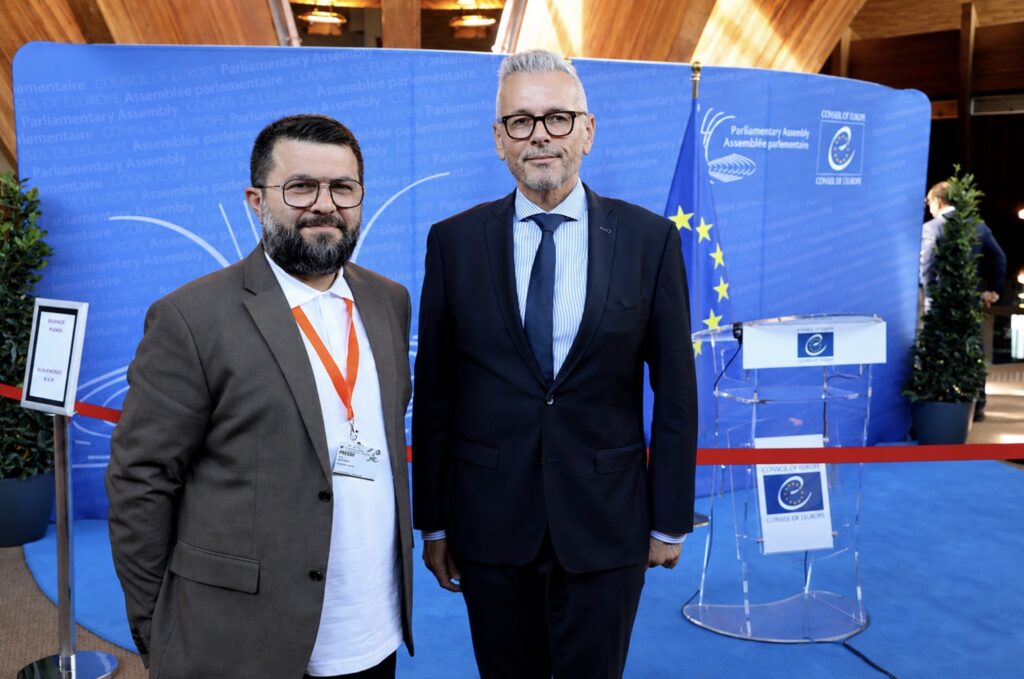
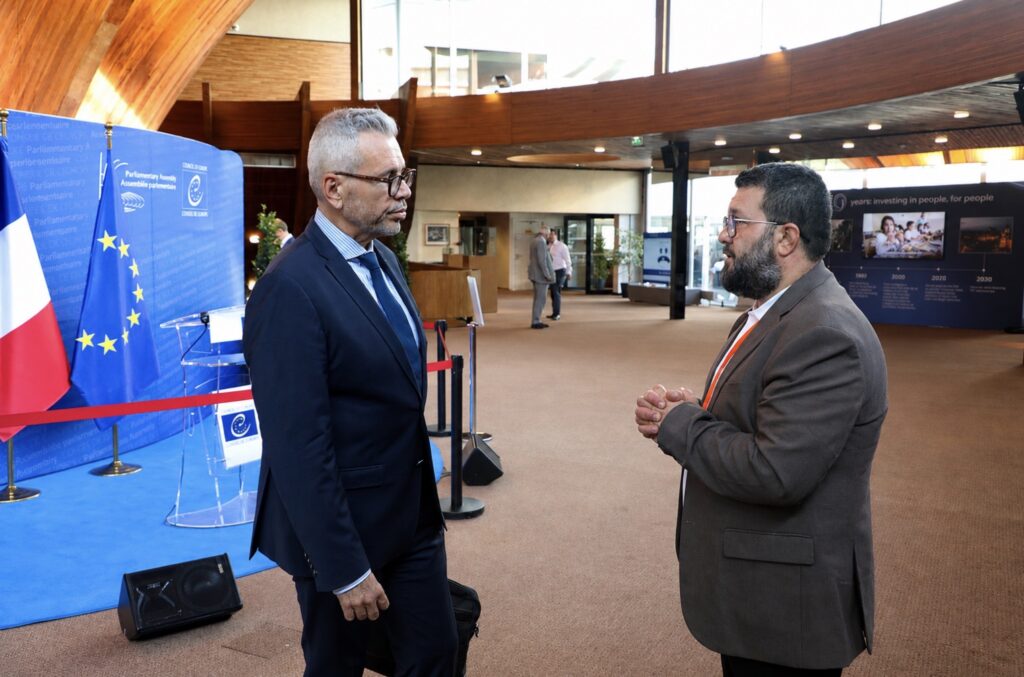
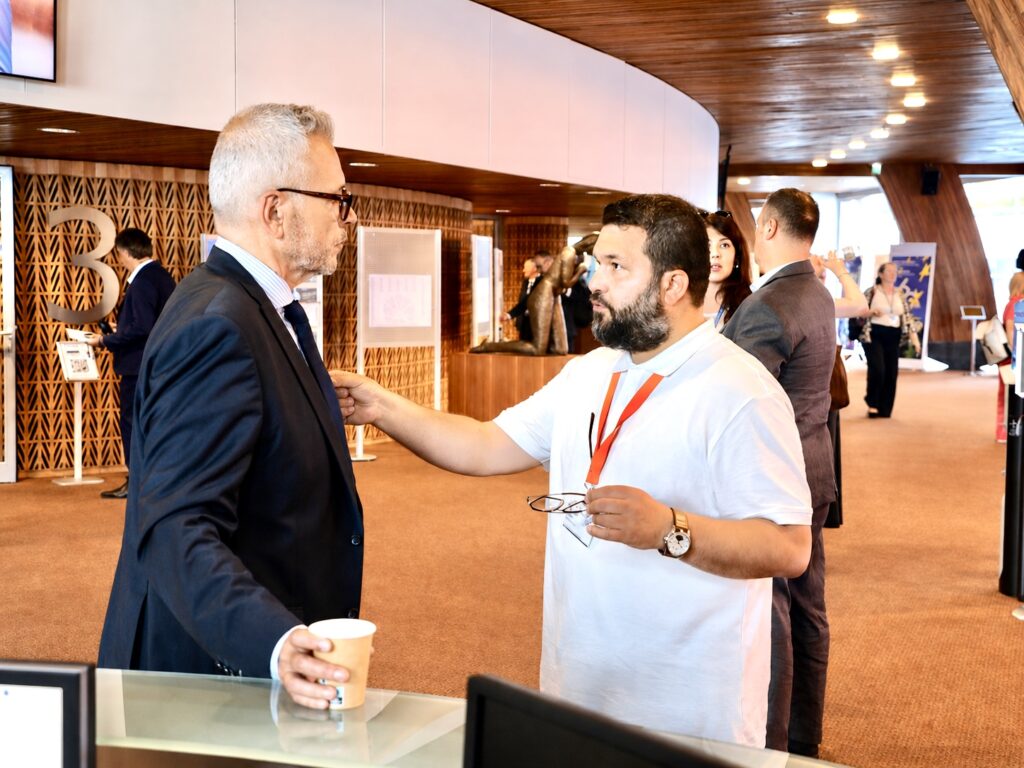
Strasbourg, 23 June 2026 – During the June session of the Parliamentary Assembly of the Council of Europe, Christophe Lacroix, a Belgian member of parliament and rapporteur of PACE’s report titled “Silencing Critical Voices in Azerbaijan”, gave an interview to the Caspian Watch YouTube channel.
The interview was conducted by Caspian Watch journalist Abid Qafarov. During the conversation, they discussed the pressure faced by journalists, human rights defenders, political activists, independent media outlets and civil society in Azerbaijan, as well as the issue of political prisoners, the independence of the judiciary, transnational repression, and Azerbaijan’s future within the Council of Europe.
Christophe Lacroix stated in the interview that repression in Azerbaijan is not directed merely against individuals, but is being implemented as a systematic policy aimed at silencing critical voices. According to him, under President Ilham Aliyev, the government, parliament and judiciary have become part of a single mechanism of control that restricts the expression of dissenting opinions.
“This is not merely a question of an authoritarian state; we are now speaking of a totalitarian model,” Lacroix said.
The rapporteur underlined that independent media in Azerbaijan has been almost completely dismantled, journalists are imprisoned on fabricated charges, and human rights defenders and academics are targeted through the same repressive mechanisms. He noted that 36 journalists are currently imprisoned in Azerbaijan and described the country as one of the most repressive in terms of the imprisonment of journalists.
In the interview, Lacroix also addressed PACE’s report titled “Silencing Critical Voices in Azerbaijan”. The report states that media freedom, political pluralism and civil society in Azerbaijan are under severe pressure. The document specifically refers to criminal proceedings against Abzas Media, Toplum TV, Meydan TV, Kanal 11, Kanal 13 and other independent media outlets, as well as pressure against human rights defenders, political activists and academics.
The issue of transnational repression was also discussed during the interview. Referring to Azerbaijani blogger Mahammad Mirzali, who was attacked in France, and human rights defender Vidadi Isgandarli, who was killed, Christophe Lacroix called on Council of Europe member states to protect political refugees from Azerbaijan and critical voices living in exile.
“The blood price is more important than the price of oil and gas,” Lacroix said, calling on European countries to put an end to what he described as “hypocritical policy” in their relations with Azerbaijan.
He also said that European states should consider targeted sanctions against judges, prosecutors, officials of the penitentiary system and security agencies responsible for human rights violations in Azerbaijan.
The rapporteur further stated that he had asked the Secretary General of the Council of Europe, Alain Berset, to activate Article 52 of the European Convention on Human Rights. According to him, this mechanism allows the Azerbaijani government to be asked for an explanation regarding the manner in which it implements the Convention.
It should be noted that a discussion on Azerbaijan is expected to take place at PACE on 24 June. The report titled “Silencing Critical Voices in Azerbaijan”, prepared by PACE’s Committee on Legal Affairs and Human Rights, accuses the Azerbaijani authorities of systematically silencing critical voices through restrictive laws, criminal prosecutions and pressure against journalists, human rights defenders and civil society activists.
The report states that there are 328 political prisoners in Azerbaijan, that the country ranks 171st out of 180 countries in the 2026 World Press Freedom Index, and that the space for independent media inside the country has been almost completely restricted.
PACE calls on the Azerbaijani authorities to release those imprisoned on politically motivated charges, investigate attacks against journalists and activists, revise media and NGO legislation, implement the judgments of the European Court of Human Rights, and prevent ill-treatment in detention facilities.
Full Text of the Interview
Abid Qafarov:
Hello everyone. I am Abid Qafarov from Caspian Watch. We are currently at the June session of the Parliamentary Assembly of the Council of Europe, and it is an honour for us to interview Mr Christophe Lacroix, the rapporteur on the issue of silencing critical voices in Azerbaijan. As you know, on 25 June there will be a detailed hearing and debate on this topic, and we hope that a new resolution will also be adopted.
Mr Lacroix, thank you for taking the time for this interview. I would also like to express my special gratitude to you and your team for the important work you are doing in defending human rights defenders, journalists and media freedom in Azerbaijan.
My first question is this: the institutional starting point of your current report goes back to the 2022 initiative concerning the safety of journalists and human rights defenders. In October 2022, another initiative also warned about the growing number of political prisoners in Azerbaijan; that list also included my own imprisonment on fabricated defamation charges. Looking back from 2026, how do you think the Azerbaijani authorities’ model of repression has changed? Has this model evolved from individual persecution into a systematic policy aimed at silencing critical voices?
Christophe Lacroix:
Mr Qafarov, you are right. You are speaking about a situation that has changed and deteriorated since 2022. In 2026, this situation has become harsher and has taken on more violent dimensions. But the systematic line of repression pursued by President Aliyev, his government and his regime actually goes back to 2014. In other words, this process is much older.
This is not simply about individual executions, or random and arbitrary arrests. What we are speaking about is a totalitarian and authoritarian system aimed at silencing all voices that criticise the regime in Azerbaijan. Moreover, these criticisms are based on entirely legitimate reasons. This regime is not only eliminating voices that oppose its policies; it is also destroying democracy.
It is very sad to see this in a country that emerged from the former Russian Empire and the Union of Soviet Socialist Republics. After the communist regime, the people had the right to hope for European and Western-style democracy. Unfortunately, however, a deeply oppressive environment has once again been created. What is happening in your country is truly terrible.
Abid Qafarov:
Thank you. Once again, I would like to thank your team for preparing such a detailed report. Your report shows that not only journalists, but also human rights defenders, election observers, opposition representatives, academics and entire independent media teams are being targeted through the same repressive mechanisms.
How do you assess this picture? Is this only a human rights crisis, or is it also the process of dismantling the last remaining elements of democratic society in Azerbaijan?
Christophe Lacroix:
It is indeed a very grave and painful picture. Today, it can be said that independent media no longer exists inside Azerbaijan at the local level. If it does exist, it is either forced to operate in hiding or, like you, has had to seek refuge abroad. But even when you are abroad, there may be threats against you, your family and those close to you.
At present, 36 journalists are in prison in Azerbaijan. They are being held in appalling conditions. Fabricated evidence, allegations of corruption, accusations of foreign influence and other completely baseless charges are brought against them. Azerbaijan is regarded as one of the most repressive countries when it comes to the imprisonment of journalists.
But as you said, the issue is not limited to journalists. It concerns the whole of civil society. Even university researchers are targeted. In reality, anyone who decides to speak freely is arrested. Sham trials, false procedures and fabricated grounds are invented for them; all mechanisms are used to keep people in prison and sentence them to harsh punishments. This also shows that the judiciary in Azerbaijan is not independent from the executive branch.
Abid Qafarov:
Your report also notes that a fact-finding visit to Azerbaijan was not possible. PACE members have been declared persona non grata, and the Azerbaijani delegation did not participate in the work of PACE in 2025 and 2026.
In a situation where the rapporteur is not allowed into the country and the authorities have withdrawn from dialogue with PACE, how can the Council of Europe monitor the real situation and ensure that Azerbaijani society is not left alone?
Christophe Lacroix:
That is correct. I, like some of my colleagues, am also on the persona non grata list, because I voted in favour of resolutions condemning the Aliyev regime. But for me, that is not the main problem. The main difficulty, as you have said, is how to obtain accurate information about what is happening there.
For this purpose, there are independent media representatives like you, who inform us about the situation. International humanitarian organisations such as Amnesty International prepare reports. In addition, within the framework of the Council of Europe, there is the Committee of Ministers, which supervises the execution of judgments of the European Court of Human Rights. Quarterly meetings are held at the level of the Committee of Ministers, and member states that delay the implementation of Court judgments must provide explanations.
It is clear that Azerbaijan is currently not participating in this work of the Committee of Ministers. That is why, in my report, I call on the Committee of Ministers to demand that Azerbaijan return to these meetings.
In addition, there is the Monitoring Committee of the Parliamentary Assembly of the Council of Europe. One of the tasks of this committee is to prepare regular reports, including quarterly reports, on the human rights situation in various member states. I also call for the Monitoring Committee to follow developments in Azerbaijan more closely on the basis of all the information we are able to obtain.
Abid Qafarov:
Thank you. Your report pays particular attention to the Law on Media, the Law on Political Parties and legislation concerning non-governmental organisations. In practice, these laws restrict independent media, civil society and political pluralism.
In your view, is the Azerbaijani government now carrying out repression not only through the police and the courts, but also by turning the law itself into an instrument of authoritarian control?
Christophe Lacroix:
Yes. Undoubtedly, that is absolutely the case. Parliament is under the control of President Aliyev; the government, of course, is also under his control; and the judiciary is in the same situation. Through parliament, the authorities adopt laws that suffocate freedom of opinion and political freedoms, in order to direct the courts.
Political parties receiving foreign funding are banned. Laws are adopted that restrict any form of political freedom, and all of this is presented as “anti-Azerbaijani propaganda”. This is truly a major problem, and I show this in my report: President Aliyev has built a system at the level of government, the judiciary and legislation in which all possibilities for the expression of dissenting views are closed.
For me, this is not merely the concept of an authoritarian state; we are now speaking of a totalitarian state model.
Abid Qafarov:
Thank you. Your report is very rich in facts, and for that reason I prefer to refer to it in my questions.
My fifth question is as follows: the report identifies allegations of sexual violence, threats of sexual violence and degrading treatment against women journalists in detention as matters of serious concern. These allegations do not appear to be isolated unlawful acts by individual officials; rather, they point to an environment of impunity and a policy of fear within the penitentiary system.
What concrete steps should PACE demand in this regard: the publication of CPT reports, continued international monitoring, or the individual accountability of those responsible?
Christophe Lacroix:
I believe that here, too, there is a very serious problem in terms of respect for human rights. There are widespread acts of violence and completely inhuman treatment in prisons. The reports of the Committee for the Prevention of Torture — the CPT — must be published. This issue must continue to be investigated and monitored at the international level.
As for sanctions, I cannot make a definitive decision on that matter, because individual sanctions cannot be imposed by the Parliamentary Assembly of the Council of Europe. But this issue must certainly be examined by the Committee of Ministers. Member states may also consider such steps individually. I myself have addressed a question to my own government regarding possible sanctions against the regime of President Aliyev and against those responsible for abuses, violations and crimes committed in Azerbaijan.
I believe that this is the responsibility of our national governments, as well as of the European Union: they should consider a package of gradual sanctions in order to force the regime to change. At the international level, we see that when sanctions or other concrete measures are not applied against officials and specific individuals, the situation either changes very slowly or does not change at all. We see this in the context of the genocide in Gaza, in the example of Israel, and also with regard to the Putin regime. Therefore, this issue must be examined seriously.
Abid Qafarov:
Your report shows that the same pattern of accusations has been applied against Abzas Media, Toplum TV, Meydan TV, Hürriyyət TV, Kanal 11, Kanal 13 and other independent media groups. The case of Ulvi Hasanli is particularly worrying. He had previously testified before a PACE committee and was later sentenced to a heavy prison term.
Do you consider this to be retaliation — in other words, punishment — for cooperation with international organisations?
Christophe Lacroix:
Yes. For me, this is clearly punishment. I was present at that meeting. The independent journalist Mr Hasanli had come there to testify. It was both moving and showed the great risk he was taking. Members of the Azerbaijani delegation were also present at that meeting, and we could see that he was being watched and recorded.
Unfortunately, the Parliamentary Assembly and international organisations cannot provide an international protection mechanism for those invited to testify here. He spoke with facts and presented information. Then he was arrested. Others who were with him were also arrested.
This is one of the difficulties faced by the Parliamentary Assembly. The Assembly is composed of delegations from different countries. The Azerbaijani parliamentary delegation, however, was coming not in a spirit of cooperation, but with the intention of repression and of closing down the possibility of investigation.
Abid Qafarov:
Mr Lacroix, the report also refers to the attempted assassination of Mahammad Mirzali. This brings us to the issue of transnational repression, which is a new threat for journalists, bloggers and civic activists. The killing of Vidadi Isgandarli in France and the pressure against Azerbaijani critics living abroad show that the Azerbaijani authorities target critics not only inside the country, but also in Europe.
What should Council of Europe member states do to protect these people? Should they accelerate asylum procedures, reject politically motivated extraditions, or strengthen security mechanisms?
Christophe Lacroix:
As a member of the Parliamentary Assembly of the Council of Europe and as a member of the Belgian parliament, I believe that member states must put an end to hypocrisy in their relations with Azerbaijan. Today, President Aliyev is received everywhere in Europe. He is also received by the European Union. And yet he is a dictator. Therefore, every member state must reconsider its position on this matter.
Of course, there is the question of the price of oil and gas. But at a certain point, there is also the price of blood. I would say it in English: the blood price — the price of blood — is more important than the price of oil and gas.
I believe that every member state must adopt a protective position towards political refugees and asylum seekers from Azerbaijan. As I said earlier, international protection mandates or similar mechanisms should be considered. We must all understand that it is our duty to protect the Azerbaijani people, and in particular the critical voices of Azerbaijan.
We have seen problems with similar regimes elsewhere as well. The Azerbaijani government may not like what I am about to say, but such governments can sometimes be compared to the dictatorial regimes we saw in Syria and Libya. At a certain stage, sanctions were applied against such regimes. Of course, negotiations are necessary; negotiations are always possible. But sanctions may also be possible, and most importantly, the dissident voices who have taken refuge in our countries must be protected. I think this must be done urgently. It depends on the political will of each member state. The key point is to move beyond this hypocrisy.
Abid Qafarov:
PACE has been making calls on the Azerbaijani authorities for many years. But your report also shows that these calls have not led to any serious change in Baku’s behaviour. In your view, are targeted individual sanctions now necessary? For example, visa bans and asset freezes against judges, prosecutors, officials of the penitentiary system and security agencies. Could such measures create real pressure on the regime?
Christophe Lacroix:
I think so, yes. But this depends not on the Parliamentary Assembly of the Council of Europe, but rather, as I have said, on the member states and their political will. Nevertheless, the Committee of Ministers of the Council of Europe must play a leading role by bringing the difficulties concerning Azerbaijan to the attention of all member states.
One of the reasons why I ask the Secretary General of the Council of Europe, Mr Alain Berset, to activate Article 52 of the European Convention on Human Rights in my report is precisely this. Article 52 of the Convention allows the Secretary General to request a precise explanation from Azerbaijan as to the manner in which it implements the Convention.
This would mean, for the first time, requesting an explanation from Azerbaijan, from President Aliyev and from his government at the level of the Committee of Ministers. I hope that, on this basis, the Committee of Ministers, together with all member states, will be able to act towards the gradual restoration of democracy and the establishment of a real dialogue with President Aliyev.
Abid Qafarov:
Azerbaijan is a member of the Council of Europe, but it does not send a delegation to PACE. Serious problems remain in the implementation of judgments of the European Court of Human Rights. You also mentioned this earlier. Meanwhile, the human rights situation continues to deteriorate.
Under these circumstances, how do you see Azerbaijan’s future within the Council of Europe? Where should PACE draw its red lines?
Christophe Lacroix:
At present, it is difficult to see Azerbaijan’s future within the Council of Europe. Today, Azerbaijan’s delegation to PACE is not participating because they do not submit their credentials. This means that we cannot decide whether they should be accepted here or not. This situation enables them not to fulfil their obligations. For example, they do not want to comply with judgments of the European Court of Human Rights, and they also do not want to appoint a new judge to that Court.
On the other hand, Azerbaijan remains a member of the Committee of Ministers. There is a serious ambiguity here. As a parliamentarian, I do not understand this. I am speaking here not as rapporteur, but politically, as a member of parliament. I do not understand how a state can remain a partial member of the Council of Europe: continuing its work in the Committee of Ministers, though not on all matters, while not being part of the Parliamentary Assembly of the Council of Europe.
Dialogue must be revived and rebuilt. But Azerbaijan must return to PACE under the strict conditions set by the Assembly. If Azerbaijan has signed agreements in order to sit here, it must accept all the conditions required by the Council of Europe. This is not merely a matter of signature and documents. It is a matter of the practical conduct that delegations must constantly demonstrate when fulfilling their responsibilities within the institutions of the Council of Europe.
For me, this is a clear red line. Unless Azerbaijan itself agrees to gradually release prisoners, repeal political laws and repressive laws that suffocate opinion, and stop all cases of torture that we know about, there can be no question of fully returning it to the Assembly. All of this must stop. Only if President Aliyev’s regime shows signs of goodwill can we have proper and effective cooperation.
Abid Qafarov:
This report is not only a document addressed to the authorities; it is also an appeal to Azerbaijani society. Journalists, human rights defenders, families of political prisoners and democratic forces are under severe pressure.
What would your message be to the Azerbaijani people? In a country where fear has become normalised, how can people preserve human dignity, freedom of speech and hope for democracy?
Christophe Lacroix:
First of all, I would like to express my admiration for the Azerbaijani people who continue to live under a totalitarian regime while also trying to live with dignity. Sometimes people risk their lives and their freedom for this, and we have seen that.
I pay tribute to the memory of all the women and men who fought for freedom in Azerbaijan and are no longer with us. I want to encourage everyone who continues the struggle, directly or indirectly, from inside Azerbaijan or from abroad.
I want to tell them that they will find support in my report. This support is, of course, moral support, but it is also political support. Even if their struggle is silenced in Azerbaijan, it is explained here, it will be voiced in the Assembly, debated, published and preserved as an official document. President Aliyev’s regime will no longer be able to claim that all of this is fabricated.
Continue the struggle. Be very careful about yourselves and your families. But the member states of the Council of Europe must stand behind you. I stand behind you, and despite the limits of my possibilities, I will accompany you to the very end, as far as I am able, in order to help bring a calmer and more peaceful future to you, your families and your loved ones.
Abid Qafarov:
Since we still have time, with your permission, I would like to ask two more questions. Thank you very much, Mr Lacroix.
As we know, Russia exerts influence over former Soviet countries. For example, when I was at an OSCE event, I saw that some former Soviet countries were holding side events on Russian interference in democratic law-making in Georgia.
In your view, documents such as the new Law on Media and the new Law on Political Parties resemble what has been done in Russia and Georgia, and are now being transferred to Azerbaijan as well. How can Azerbaijan, Georgia and other former Soviet countries prevent Russia from interfering in our domestic democratic legislative processes? How can the European Union help us prevent this?
Christophe Lacroix:
I would put it this way: if Georgia and Azerbaijan were democracies, they would be able to resist the propaganda, measures and laws that Vladimir Putin and his regime directly or indirectly impose.
We saw this in Hungary. Viktor Orbán was defeated in the elections and replaced by Péter Magyar, because Hungarians wanted democracy, respect and freedom from Russian influence. They were able to do this because there was democracy there.
Therefore, at the level of the European Union and the Council of Europe member states, we must act in two directions. First, we must force the regimes in Georgia and Azerbaijan to restore real and full democracy as much as possible, so that the people truly have a voice. Second, at the level of the European Union, we must continue sanctions against Vladimir Putin’s regime and oligarchs.
We stand with the Ukrainian people. In the same way, we must also stand with the peoples of Georgia and Azerbaijan, as well as other peoples facing Russian pressure and interference. I am also thinking of Serbia; there are problems there as well. Therefore, we must be very vigilant and act decisively through diplomatic, political and economic sanctions.
Abid Qafarov:
Absolutely. You touched upon the issue of democracy and gas. I would like to ask perhaps the most important question of this interview. We often hear that Aliyev is exchanging democracy for gas, and it appears that European society and institutions are also comfortable with this bargain.
In your view, how will Europe stop turning a blind eye to this “democracy in exchange for gas” trade with dictators? This is a vital issue for peoples who live in countries rich in oil and gas but do not benefit from those resources. When should we expect Europe to say that “democracy cannot be exchanged for gas”?
Christophe Lacroix:
I support a firm position on this issue. I believe that Europe not buying gas and oil from Russia — normally not buying it, because there are still parallel channels, such as the Azerbaijani channel — does not free us from the obligation to respect our values.
The European Union, the Parliamentary Assembly of the Council of Europe and the Council of Europe were built after the Second World War on this idea: we want democracy, we want justice, and we want social, political and economic freedom.
Today, if we have to negotiate with a dictatorial regime such as that of President Aliyev over energy resources such as gas and oil, I believe we must have the courage to put forward political conditions. In other words, yes, you provide us with gas and oil, we need it and we ask it from you. But on the other hand, you must also undertake to begin political reforms, improve freedoms, ensure the freedom of journalists, political freedom, media independence and the independence of the judiciary.
In my view, a commercial agreement would make sense only if it were conditioned on political and humanitarian measures. I believe there is a great deal of hypocrisy within the European Union on this issue. As a socialist and a human rights defender, what particularly concerns me is that red carpets are rolled out for President Aliyev, and events are organised in Baku that give the regime an international showcase.
There comes a point when this must stop. Because it appears completely undignified and completely unacceptable. I hope that the governments of European Union member states, Ms Kallas and Ms von der Leyen, will read my report and understand that Europe has economic interests, but Europe’s political interest cannot consist of cooperating