“A Winning Country, but a Hard Life”

The idea that “things will get better after the war” has gradually faded and collapsed.
The war is over, so why hasn’t the expected prosperity arrived?
In the autumn of 2020, one of the most widespread expectations in Azerbaijani society was that after the end of the war, a new phase would begin in the country’s economic, social, and political life. People believed that the burden of a long-standing conflict would be lifted, that state resources would be used more efficiently, that living standards would rise, and that the quality of governance would improve.
However, the years that have passed since then have shown that there is no automatic link between military victory and national development. More precisely, victory creates an opportunity—but whether that opportunity is used depends on governance models, political institutions, and economic strategy.
Today, a striking and somewhat troubling picture has emerged. In some international indicators, Armenia—a country that lost the war—has shown better results than Azerbaijan, the victorious side. This does not mean Armenia is a problem-free country. On the contrary, it still faces serious challenges such as poverty, migration, security risks, and economic dependency. Yet despite all this, it has achieved certain advantages in areas such as political competition, media environment, civic engagement, and some economic indicators.
History offers many similar examples.
At the end of the Second World War, Germany lay in ruins. Berlin had been reduced to rubble, much of its industrial base destroyed, and millions had lost their lives. Most observers at the time believed Germany would need many decades to recover.
Yet within a few decades, the situation changed completely.
In the Soviet Union—one of the main victors of the war—people were standing in food lines, while defeated Germany became one of the world’s most advanced economies.
The key reason was not Germany’s defeat itself.
The key reason was the system built after the war.
Germany’s economic development was primarily based on strong institutions. Courts did not become extensions of political power. Parliament was not a symbolic body. Local governance gained real authority. The press retained its right to criticize.
Another crucial factor was an economy built on competition.
In countries where property rights are protected, courts function with relative independence, and entrepreneurs feel secure, investment flows in. Where investment comes in, production emerges. And where production emerges, prosperity increases.
This simple truth is more important than oil, gas, or natural resources.
Because resources can make a country wealthy, but institutions make a country developed.
This is precisely where Azerbaijan’s main problem becomes visible.
Over the past twenty years, hundreds of billions of dollars in oil revenue have entered the country. Roads, bridges, airports, stadiums, and impressive buildings have been constructed with this money. Yet the experience of developed countries shows that physical infrastructure is only the visible part of development.
The real issue is the invisible infrastructure:
An independent judiciary.
Quality universities.
Free media.
A competitive business environment.
Transparent governance.
Inclusiveness.
These are the foundations of long-term prosperity.
Reports from the World Bank, Transparency International, and other global institutions have pointed to the same issues for years: corruption, weak legal protections, economic monopolies, and limited competition all create serious barriers to development.
Another weakness of Azerbaijan’s economy is its heavy dependence on oil.
When oil revenues are high, problems remain hidden. The state budget expands, social payments increase, and large projects are implemented. But as soon as there are shifts in energy markets, structural problems become visible.
That is why, despite long-standing discussions about developing the non-oil sector, the economy still largely depends on energy revenues.
Armenia, on the other hand, is trying to move along a different path.
It has neither significant oil reserves nor large financial resources.
For this reason, it has been forced to focus more on human capital, information technology, and small and medium-sized enterprises.
In recent years, Armenia’s tech sector has become one of the fastest-growing parts of its economy. Various international companies have begun operating there. A startup ecosystem has emerged. All of this has not yet created an economic miracle, but it has helped shift the direction of the economy.
In the political sphere, another important factor stands out.
In 2018, power in Armenia changed as a result of street protests. The outcomes of this event cannot all be evaluated positively. However, one fact is undeniable: society witnessed that the voice of citizens can influence the political system.
This perception changes the relationship between the state and the citizen.
People begin to see themselves not merely as objects of governance, but as participants in political processes.
This is why democracy is not only a political issue. It is also an economic one.
Because the more a government is subject to public scrutiny, the more efficiently it is forced to spend public resources.
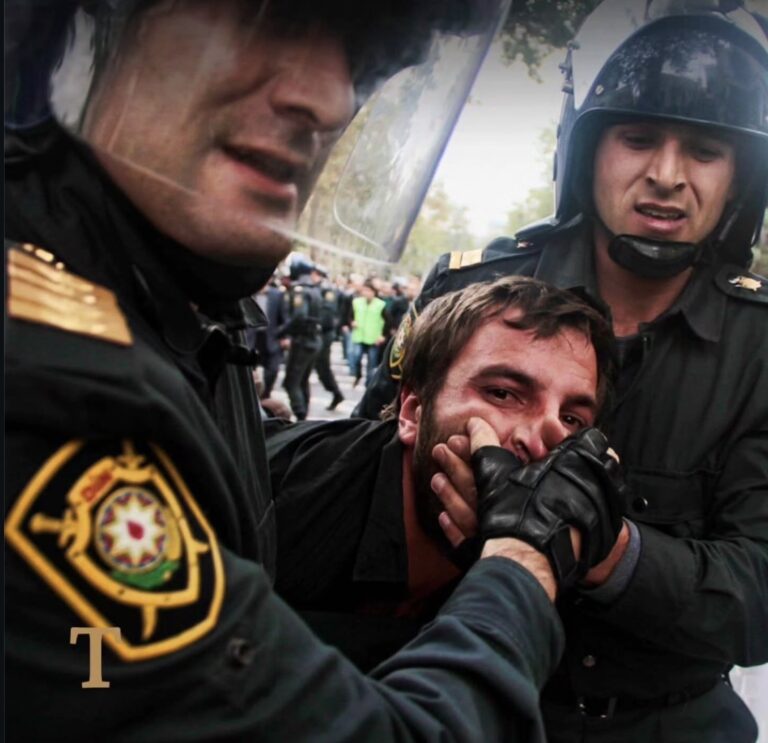
In Azerbaijan, one of the biggest post-war problems has been the widening gap between public expectations and reality.
People expected that victory would bring major changes in living conditions.
However, issues such as purchasing power of average income, housing affordability, job opportunities for young people, and the quality of education and healthcare remain largely unchanged.
As a result, a question arises in part of society:
If we have won, why are we not living like citizens of a victorious country?
The answer to this question is not found on the battlefield.
It lies in governance.
History shows that it is not tanks but institutions that determine a nation’s prosperity.
Armies may change borders, but laws change people’s lives.
Wars may decide the fate of territories, but it is courts, universities, free media, competitive economies, and responsible governance that shape the future of states.
Germany’s success was not rooted in defeat.
Nor is Armenia’s progress in certain areas rooted in loss.
The real secret lies in how societies govern themselves.
In the 21st century, the strength of a state is no longer measured by the number of its tanks, but by the quality of its institutions.
Orkhan Adigozal
21.06.2026