PACE report accuses Azerbaijan of systematic crackdown on critical voices, independent media and civil society
Parliamentary Assembly of the Council of Europe calls for release of journalists and political prisoners, warns of shrinking civic space
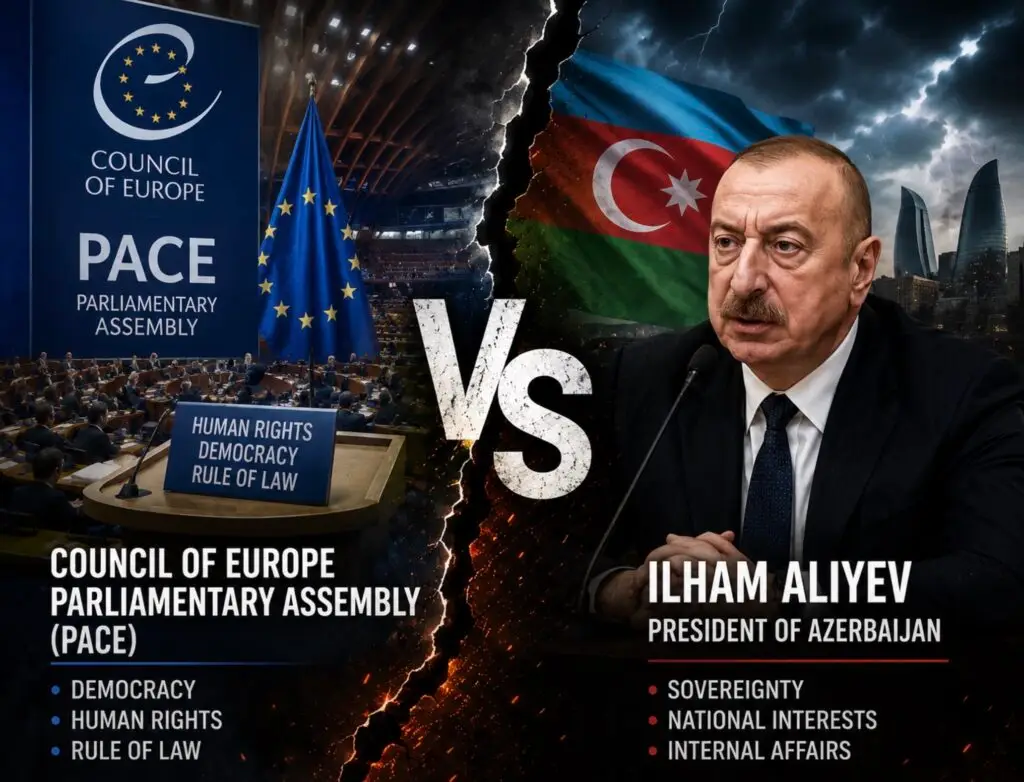
The Parliamentary Assembly of the Council of Europe (PACE) has published a critical report accusing Azerbaijani authorities of pursuing a “systemic pattern of silencing dissent and independent voices” through restrictive legislation, criminal prosecutions and pressure on journalists, human rights defenders and civil society activists.
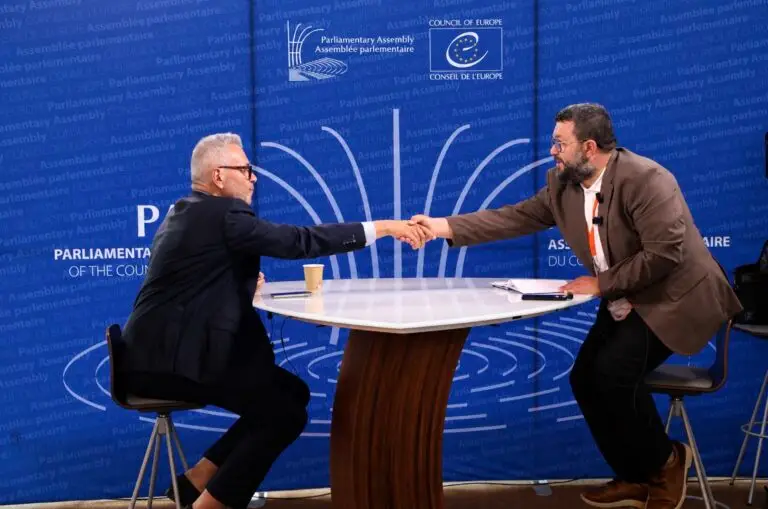
The report, titled “Silencing critical voices in Azerbaijan” (Doc. 16414), was prepared by the PACE Committee on Legal Affairs and Human Rights and presented on 1 June 2026. The rapporteur is Belgian lawmaker Christophe Lacroix.
According to the report, the situation of freedom of expression and media freedom in Azerbaijan has significantly deteriorated in recent years, with independent journalism and civic activism facing increasing restrictions.
“Since 2023, Azerbaijan has seen a worrying intensification of repressive measures targeting anyone perceived as a government critic,” the report states.
PACE argues that a combination of targeted arrests, restrictive laws and harassment has contributed to the dismantling of independent media and the shrinking of civic space.
Azerbaijan ranked among lowest countries for press freedom
The report refers to the 2026 World Press Freedom Index published by Reporters Without Borders (RSF), according to which Azerbaijan ranks 171st out of 180 countries.
PACE states that Azerbaijan has reached a point where “not a single independent media outlet operates within Azerbaijan,” describing this situation as incompatible with the principles of the Council of Europe.
The report also cites figures from the Council of Europe’s Platform for the Safety of Journalists, which records 36 journalists currently detained in Azerbaijan.
PACE says that attacks and threats against journalists have increased, noting that hundreds of incidents affecting media workers were reported in recent years.
328 political prisoners reported
The report highlights concerns over the growing number of individuals considered political prisoners by Azerbaijani civil society groups.
According to the Union for the Freedom of Political Prisoners of Azerbaijan, cited in the report, 328 political prisoners were recorded in May 2026, including journalists, human rights defenders and opposition activists.
PACE particularly highlights the case of human rights defender and election monitor Anar Mammadli, a recipient of the Václav Havel Human Rights Prize.
The report recalls that the European Court of Human Rights previously found his detention to be politically motivated and expressed concern that his current prosecution may again be linked to his civil society activities.
Abzas Media case highlighted
A significant part of the report focuses on the prosecution of journalists and staff members of Abzas Media, an independent Azerbaijani investigative outlet.
PACE condemns the lengthy prison sentences handed down to Abzas Media journalists, saying that criminal law has been misused to punish independent reporting and cooperation with international organisations.
The report mentions the convictions of:
- Ulvi Hasanli, founder and editor-in-chief of Abzas Media;
- Sevinc Vagifgizi, editor-in-chief;
- investigative journalist Hafiz Babali;
- reporters Nargiz Absalamova and Elnara Gasimova;
- coordinator Mahammad Kekalov;
- economist and contributor Farid Mehralizade.
PACE notes that the arrests followed investigations into alleged corruption and government officials and argues that the charges appear politically motivated.
The report quotes Ulvi Hasanli’s statement in court:
“We have lost our freedom for the sake of free speech and independent media.”
Pressure on Meydan TV, Toplum TV and other outlets
The report also refers to cases involving other independent media organisations, including Meydan TV, Toplum TV, Kanal 11, Kanal 13 and Radio Free Europe/Radio Liberty.
PACE states that journalists and staff members of these outlets have faced prosecution on charges that appear to be fabricated or linked to their professional activities.
The report describes the raid on Toplum TV in March 2024, when police seized equipment, detained journalists and activists, and blocked access to the outlet’s digital platforms.
Attacks against journalists and activists
PACE recalls several cases of violence and threats against journalists and human rights defenders.
Murder of Avaz Hafizli
The report highlights the killing of journalist and LGBTI rights activist Avaz Hafizli in February 2022.
PACE states that Hafizli was known for reporting on discrimination and violence against the LGBTI community and that his death raised concerns over hate crimes and the protection of vulnerable activists.
Threats against Ayten Mammadova
The report also refers to the attack against journalist Ayten Mammadova in May 2022.
According to the document, an unidentified man threatened to kill her and her daughter and demanded that she stop reporting on a criminal case.
Concerns over transnational repression
PACE expresses concern over attacks against Azerbaijani journalists and activists living abroad.
The report examines the case of blogger and opposition activist Mahammad Mirzali, who has faced several violent attacks in France.
It also mentions the killing of Azerbaijani human rights defender Vidadi Isgandarli in France in 2024, describing it as a serious escalation in threats against exiled critics.
Human rights defenders and activists targeted
The report names several prominent activists and human rights defenders whose cases have drawn international attention, including:
- Bakhtiyar Hajiyev;
- Akif Gurbanov;
- Gubad Ibadoghlu;
- Rufat Safarov;
- Anar Mammadli.
PACE argues that charges brought against many of these individuals appear to be connected to their criticism of government policies, anti-corruption activities or human rights work.
Crackdown on academics and peace activists
The report also raises concerns over prosecutions of researchers and peace activists.
PACE highlights the cases of political scientist Bahruz Samadov and researcher Iqbal Abilov, both convicted on serious charges.
The Assembly says academic freedom and peaceful advocacy must be protected as essential elements of democratic societies.
Concerns over surveillance and restrictive legislation
The report expresses concern over alleged state surveillance practices, including claims related to the use of Pegasus spyware against journalists and activists.
PACE also criticises Azerbaijan’s media, political party and NGO legislation, arguing that these laws have restricted freedom of expression, association and independent journalism.
The Assembly says recommendations from the Venice Commission regarding these laws have not been implemented.
PACE calls on Azerbaijan to release prisoners and implement reforms
The Parliamentary Assembly urges Azerbaijani authorities to:
- release individuals detained on politically motivated charges;
- ensure fair trials and judicial independence;
- investigate attacks and threats against journalists and activists;
- reform media and NGO legislation;
- implement judgments of the European Court of Human Rights;
- improve conditions of detention and prevent ill-treatment.
PACE also calls on Council of Europe member states and the European Union to raise the issue of political prisoners with Azerbaijani authorities and provide protection to those facing persecution.
“Turning a blind eye is not a solution”
In its conclusions, PACE warns that continued restrictions on freedom of expression, political pluralism and civil society pose a serious challenge to democratic values.
“Turning a blind eye on systematic, extensive and serious human rights violations is not a long-term solution and will not lead to a safer, more peaceful Europe,” the report states.
The Azerbaijani authorities have previously rejected similar international criticism, arguing that fundamental rights and freedoms are protected in the country and that prosecutions are based on domestic law rather than political motives.