Deutsche Presse: Das Aliyev-Regime folgt Putins Repressionskurs
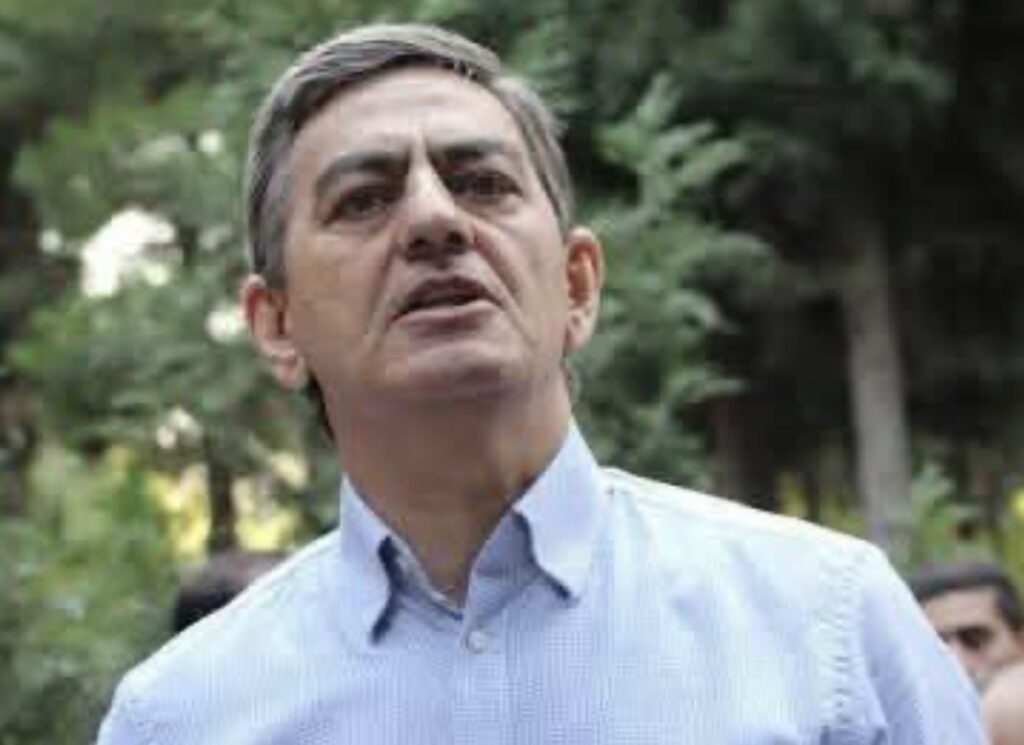
Another foreign media outlet has drawn attention to the imprisonment of Azerbaijani opposition leader Ali Karimli. Germany’s Hessische/Niedersächsische Allgemeine newspaper has published an extensive article about the case of the chairman of the Azerbaijan Popular Front Party, describing Azerbaijan’s increasingly authoritarian course and the pressure faced by government critics.
The article, titled “Azerbaijan Follows Putin’s Path,” argues that Azerbaijan, while remaining an important economic partner for the European Union, is simultaneously deepening its ties with Russia and intensifying repression at home.
Ali Karimli, one of Azerbaijan’s most prominent opposition figures, has been in detention since late 2025. He is accused of attempting to seize power — a charge his family and supporters describe as politically motivated and absurd.
In a rare written interview sent from detention, Karimli described extremely harsh prison conditions. According to him, after giving an interview to France 24, he was deprived of family visits, daily outdoor walks, and access to radio and television. He said he was transferred to a cell with an ISIS member convicted on terrorism charges who allegedly suffers from mental health problems and performs “strange and extremely loud rituals” every night.
“The goal is completely clear: to deprive me of sleep through a specially selected prisoner,” Karimli wrote.
Despite the pressure, Karimli does not call on the West to cut economic ties with Azerbaijan. Instead, he urges Germany and other democratic countries to adopt a principled approach and raise human rights and democracy issues openly in their relations with Baku.
“Germany should be a friend of the Azerbaijani people, not of the Aliyev family, and should remain loyal to its democratic values,” Karimli said.
His daughter, Sazan Karimli, told the German press that the West must change the calculations of the Azerbaijani authorities. According to her, the government currently believes that the political cost of keeping hundreds of political prisoners is low.
“If repression has a real political and economic price, the authorities will change their behavior,” she said.
The article notes that European Commission President Ursula von der Leyen recently met with Azerbaijani President Ilham Aliyev. While the public part of the meeting focused mainly on investment and economic cooperation, critics argue that human rights should also be placed at the center of Europe’s dialogue with Baku.
According to the Council of Europe, there were 328 political prisoners in Azerbaijan as of June. Human rights organizations have repeatedly warned that the country’s authorities are suppressing dissent, targeting journalists, opposition activists, civil society representatives, and independent voices.
Amnesty International has stated that the Azerbaijani government suppresses “all forms of protest” and has documented cases of political imprisonment, torture, and ill-treatment. Reporters Without Borders ranks Azerbaijan 171st in its World Press Freedom Index, placing the country among the worst in the world for media freedom.
Karimli says more than 30 journalists are currently behind bars in Azerbaijan. In recent cases, journalists and bloggers have received prison sentences of up to 15 or 16 years.
The article also recalls that the Aliyev family has ruled Azerbaijan almost continuously since 1969, beginning with Heydar Aliyev’s rise during the Soviet period. Ilham Aliyev became president in 2003 after his father’s rule and has remained in power ever since.
Human Rights Watch has reported that pressure on the Azerbaijan Popular Front Party intensified in 2025. Karimli was arrested at the end of November after a search of his home that lasted several hours. He remains in pre-trial detention. His daughter fears that he could face a life sentence.
Amnesty International has described his arrest as another sign of the consolidation of authoritarian rule in Azerbaijan.
The article also highlights Azerbaijan’s close ties with Russia. It notes that Baku has helped Moscow evade sanctions, participated in the re-export of sanctioned Russian oil, and, according to Ukrainian media reports, cooperated with Russia in arms production through the state company Azersilah. Azerbaijan and Russia also maintain an alliance agreement.
Sazan Karimli believes that the main reason behind Baku’s closeness with the Kremlin is the shared interest of both regimes in preserving their power.
She also described the current situation inside Azerbaijan as heartbreaking.
“What shocks me most is that ordinary Azerbaijanis live in fear,” she said.
According to her, even a simple social media post can lead to police pressure. Journalists and activists are arrested and sentenced to long prison terms. She noted that courts sometimes give terrorists or serious criminals seven or eight years in prison, while journalists and civil society representatives now receive sentences of 15 or 16 years.
As a result, many people believe that participation in political life means risking everything.
Karimli says President Ilham Aliyev is using increasingly harsh repression to frighten society, silence citizens, and prevent demands for a change of government through elections.
He proposes a democratic transition based on several steps: the release of all political prisoners, reform of election legislation in line with Western standards, gradual democratization of the state, and the holding of free and fair elections.
Karimli also says that international sanctions should be imposed on officials who obstruct this process.
Sazan Karimli emphasized that the Azerbaijani opposition has never had the opportunity to operate freely and has faced systematic pressure for years. She added that repression has also crossed the country’s borders, with court verdicts in absentia against critics living abroad and reports of attacks on government critics in the United States.
This phenomenon is known in international law and human rights literature as transnational repression.